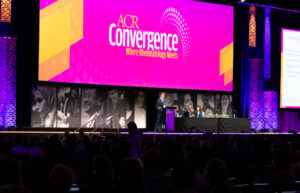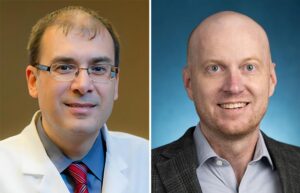



The Business of Rheumatology track at ACR Convergence 2026 aims to share practical advice that empowers private practices to thrive—not just survive—amid the challenges of running a successful business while providing quality care for people living with rheumatic disease.
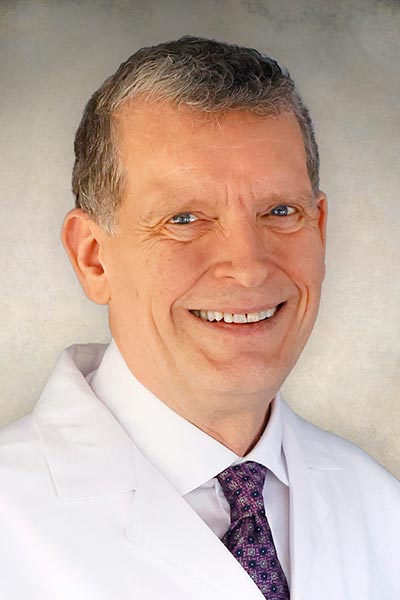
“The ACR has seen a need to educate private practice physicians on how to run practices better and learn the business side of things, so we have quite a few good, practical sessions,” said Donald Thomas Jr., MD, FACP, FACR, Chair of the Business of Rheumatology Team for the Annual Meeting Planning Committee (AMPC). “But it’s not just for private practice doctors; it’s also for academia because they also have to be able to recoup money and reimbursements in order to make their rheumatology departments thrive, and so it’s important for them to learn the business side of things.”
Sessions in the track will take place over two days, Sunday and Monday, November 8–9, touching on key topics such as prior authorizations, advocacy, reimbursement, clinical trial participation, and more.
In Sunday’s Medically Integrated Dispensing: The Survival Strategy for Independent Rheumatology, 8:30–10 a.m., in Room W315 of the Orange County Convention Center, Nehad Soloman, MD, and Meredith Hirsch, MBA, will address what has become a solution to one of the financial challenges facing many practices from the viewpoints of a rheumatologist and an office administrator, respectively.
“It has become more difficult to run a private practice. For example, ordering medications to infuse our patients and then receiving a bill that’s higher than what Medicare or insurance will pay us for it,” Dr. Thomas said. “Because of difficulties like this, private practices are dying across the nation.”
Medically integrated dispensing, in which the rheumatologist prescribes the patient a biologic and then dispenses it through the same practice, gets medications approved and into the hands of patients more efficiently—and the practice is often better reimbursed for the services and medication, Dr. Thomas noted.
“Everything is done through the physician and our nurses and our medical assistants, so that at every single point along the way, we know that it’s the correct medication for them and they are going to actually get the medication and not pay too much for it,” he said.
Monday will offer expert insights into evaluating the financial health of a private practice in Leveraging Business Analytics for a More Profitable Practice, 1–2 p.m. in Room W315. Brian Smith, PhD, MBA, will outline a structured approach to problem solving using data analytics and process improvement. Adrienne Hollander, MD, will explain how a financial scoreboard can help track and analyze practice metrics.
“It’s going to give us a practical guide on what we can take back to our accountants to do for our practice and improve the health of our practice,” Dr. Thomas said. “A healthier rheumatology practice ultimately means healthier patients.”
Also on Monday, Rheumatology on the Hill: The State of Play in Washington, DC, 8–9:30 a.m. in Room W315, will summarize the ACR’s legislative priorities and the advocacy work taking place on Capitol Hill surrounding topics of interest to the rheumatology community.
Closing out the Business of Rheumatology track on Monday and drawing from their own experiences, Tien-I Karleen Su, MD, and Arinola Dada, MD, FACR, will discuss how to build a sustainable program for clinical trial participation, which some private practices shy away from because the process can be complicated.
“Dr. Su has been doing it for many years. She’s going to give us the standpoint of how she started 15 years ago, how she’s been able to maintain it, and the kind of things she learned along the way—the mistakes she’s made and the successes she’s had,” Dr. Thomas said. Clinical Trials: Behind the Scenes and Practical Pearls for Private Practices takes place from 4–5 p.m. in Room W315.
Dr. Thomas also highlighted the preconference Practice Innovation Summit, as organizers expect the Summit and the Business of Rheumatology track will have significant crossover in attendee interest.
“If private practice rheumatologists sign up for both of these [the Summit and ACR Convergence], they’re going to get an amazing amount of private practice and business management education,” Dr. Thomas said. The Summit requires a separate registration.
The complete list of ACR Convergence 2026 Business of Rheumatology track sessions is available in the online program.
Additional Business of Rheumatology Sessions
Sunday, November 8
- Quality Payment Program Reporting for 2026 – The New RISE Registry QPP, 10:30–11:30 a.m., W315
- Rheumatology Biologic Prior Authorizations: Common Pitfalls, Best-Practice Documentation, and Partnering for Success, 1–2 p.m., Room W315
- Retaining the Late Career Rheumatologist, 2:30–3:30 p.m., Room W315
- The Hidden Risks in Your Rheumatology Practice: Leadership Metrics You Can’t Afford to Ignore, 4–5 p.m., Room W315
Monday, November 9
- Linking Reimbursement and Funding to Compensation: Essential Concepts Rheumatologists Should Master, But Rarely Do, 10–11:30 a.m.
- Biologics in the Age of Price Negotiation: IRA, Access, and the Future of Care, 2:30–3:30 p.m., Room W315

THERE’S STILL TIME TO JOIN US
If you haven’t registered for ACR Convergence 2026, you can still register on-site at the Orange County Convention Center in Orlando, Florida, through November 11. All registered participants receive on-demand access to scientific sessions through September 30, 2027.