

ACR Convergence is designed to expand the knowledge and networks of the entire rheumatology team, ultimately facilitating better care for people living with rheumatic disease.
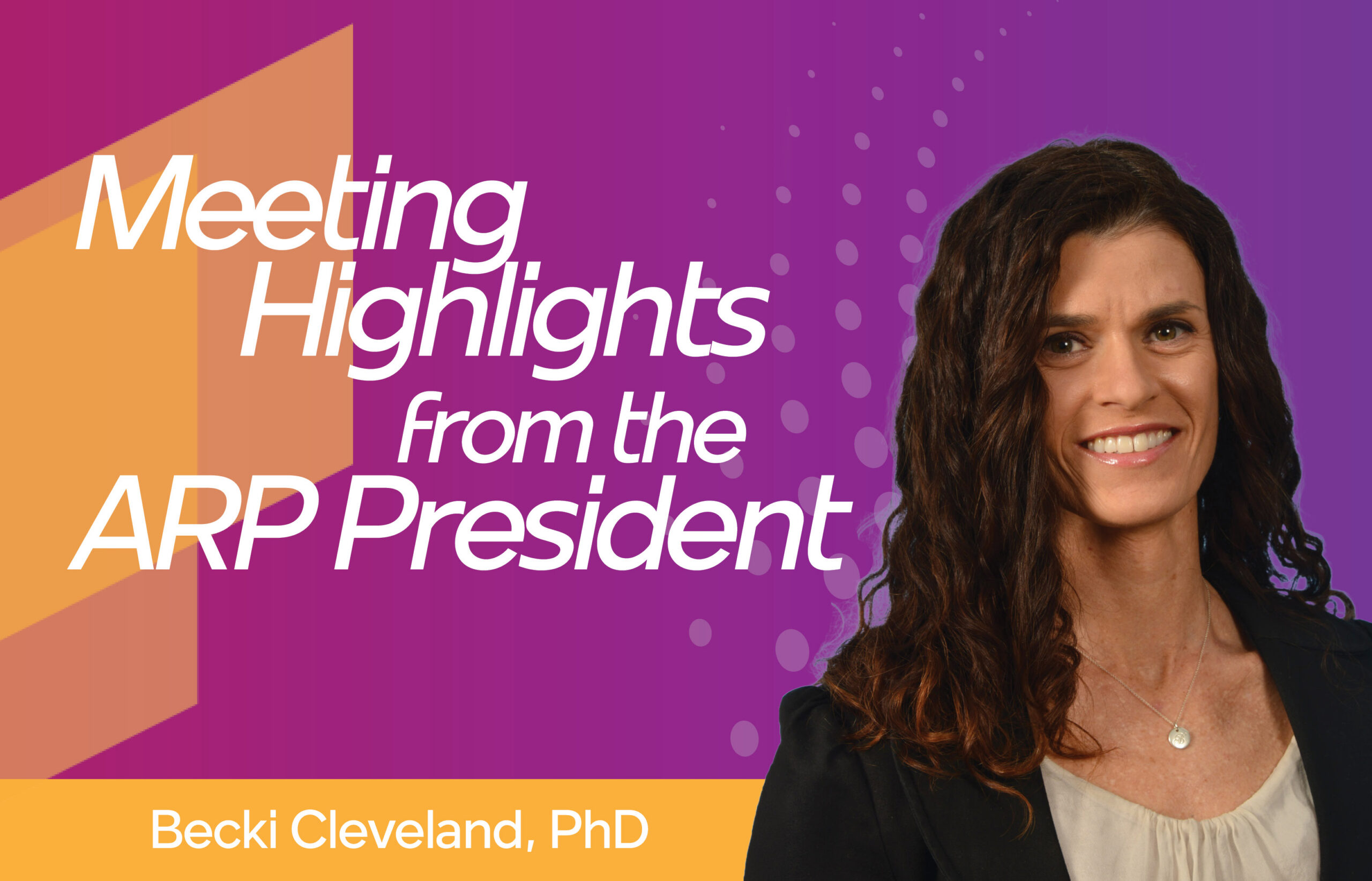
“Everyone—from physicians and nurse practitioners to physician associates, pharmacists, psychologists, social workers, therapists, nurses, and researchers—comes together to learn from the same cutting-edge science while also having education opportunities tailored to their specific roles,” said ARP President Becki Cleveland, PhD. “That combination of shared learning and profession-specific programming creates a unique environment where you gain new knowledge, learn from colleagues with different perspectives, and leave with ideas you can put into practice right away.”
Dr. Cleveland shared the following ACR Convergence 2026 program highlights, which should appeal to ARP members, with ACR Convergence Today.
“We have an exceptional program planned for this year’s meeting—one that will inform, inspire, and empower every member of the rheumatology care team,” she said.
The ARP Keynote on Sunday, November 8, at 1 p.m., will address what Dr. Cleveland considers one of the most exciting and rapidly evolving areas in healthcare: the role of food systems and environment in shaping the burden of rheumatic disease.
“Attendees will discover how nutrition and food systems not only influence health outcomes, but can also become powerful tools for improving the lives of the patients we serve,” she noted.
Two other special lectures will explore topics that directly impact patient care. On Monday, November 9, at 1 p.m., the ARP Distinguished Lecture will review the latest recommendations for treating fibromyalgia. The Daltroy Lecture will follow on Tuesday, November 10, at 1 p.m. with an overview of innovative approaches to translating complex clinical research into meaningful conversations with patients through community engagement.
Physical activity will also be in the spotlight. A Sunday session, starting at 10:30 a.m., will share new perspectives on implementing exercise into care and practical strategies clinicians can use to improve patient engagement and support long-term behavior change.
“We all know that physical activity is one of the most effective treatments we can recommend, but we also know that simply prescribing exercise is often not enough,” Dr. Cleveland explained. “Many patients struggle to get started or to maintain an exercise routine over time. That’s exactly what From Prescription to Commitment: Rethinking Exercise Implementation in Rheumatic Diseases addresses.”
Two popular series will return to the ACR Convergence lineup: the Immunology Bootcamp and Stats Bootcamp. The Immunology Bootcamp is divided into two parts, each lasting an hour. The first will take place on Sunday at 3:30 p.m., and the second on Monday at 10 a.m.
“They do an outstanding job of breaking down immunology into concepts that are easy to understand while connecting the science directly to the diseases we treat and the therapies we use every day,” Dr. Cleveland said. “These sessions are great for those new to rheumatology or anyone looking to see what’s new or refresh their knowledge.”
She expects the hourlong Stats Bootcamp: Introduction to Statistical Power and Sample Size Calculation: What It Means and Why It Is Important, starting at 8:30 a.m. on Monday, will be another well-attended session because the two featured topics are ones that most researchers encounter when designing studies, writing grants, or reviewing manuscripts, so understanding these concepts is essential.
“One of the biggest reasons this seminar is so popular is the speakers,” Dr. Cleveland noted. “They have a real talent for taking topics that can seem intimidating and explaining them in a way that’s practical, relatable, and easy to understand. Attendees leave feeling much more confident about designing studies, interpreting statistical concepts, and having productive conversations with statisticians.”
Artificial intelligence (AI) is another topic of growing interest for the whole care team, and it will be showcased on Monday at 2 p.m. in the session Reimagining Rheumatology Care with Artificial Intelligence and Virtual Reality.
“This may be one of the most exciting sessions in this year’s program because they will show how technology is changing the way we support patients between clinic visits,” Dr. Cleveland said.
Speakers will discuss how fully immersive virtual reality can help reduce pain, encourage physical activity, and make patient education more engaging, as well as how AI-powered health coaching can provide personalized support, evidence-based education, and practical strategies to help patients manage the day-to-day challenges of living with rheumatic disease.
“What I really like about these presentations is that they focus on tools that can complement the care we already provide and will discuss ways we can put them into clinical practice,” Dr. Cleveland said. “They’re giving us a glimpse of how technologies like virtual reality and AI can empower patients, improve self-management, and extend our reach well beyond the exam room.”
For more details on the educational offerings at ACR Convergence 2026, view the schedule at a glance or the full program to start planning your itinerary.

JOIN US IN ORLANDO
If you haven’t registered for ACR Convergence 2026, register today to participate in this year’s premier rheumatology experience, November 6–11 in Orlando, Florida. All registered participants receive on-demand access to scientific sessions after the meeting through September 30, 2027.