



Experts updated attendees on selected important papers of the past year — along with key takeaways — in the areas of clinical practice, basic science, and rehabilitation during the ARP Year in Review on Sunday at ACR Convergence 2025.
Recorded sessions at ACR Convergence 2025, including the ARP Year in Review, will be available on demand to all registered meeting participants within 72 hours of the live presentation through October 31, 2026, by logging into the meeting website.

Clinical Practice
Basia Belza, RN, PhD, the de Tornyay Endowed Professor in Aging in the School of Nursing at the University of Washington, picked one article from each of five key areas of clinical practice — guidelines, environment, workforce, models of care, and technology — for her review.
“I used a visionary kind of approach to see what my crystal ball might suggest, and I also used my gut to identify those that will have an impact on practice,” she said. “Most crucially, I hope to share action items that you can commit to.”
Dr. Belza emphasized the importance of knowing the current guidelines for the diseases rheumatology care providers treat. The ACR recently published newly developed lupus nephritis guidelines, which include 28 recommendations for screening and management.
“These recommendations really focus on the principle that therapy is continuous and ongoing rather than discrete and should include pulse glucocorticoids followed by oral glucocorticoid taper, as well as two additional immunosuppressive agents for three to five years,” she said.
Another emerging area she highlighted is the increase in the prevalence of autoimmunity and autoimmune diseases. She discussed research that illuminated how multiple exposures that alter the immune system over time set the stage for the effects of later exposure with synergistic and additive impacts that result in chronic low-level inflammation.
“We need to bring the environment into our clinics and begin these discussions of these risk factors in our practice to prevent new, as well as flares of existing, diseases,” Dr. Belza said, quoting the researchers, who also suggested that care providers provide more practical advice to patients and their families about ways to avoid and minimize exposures.
A recent editorial on workforce shortages highlighted estimates suggesting a deficit of 4,000 rheumatology providers by 2030.
“Adding advanced practice providers to our team-based care models is a really valuable strategy, not only just to help improve patient access, but also to look at specific outcomes,” Dr. Belza said.
She also highlighted new information on the different ways nurse practitioners and physician assistants are integrated into clinic settings, and how advanced practice providers offer high-quality patient-centered care, helping to improve outcomes for complex conditions, and enhance patient satisfaction and access to care.
Finally, she turned to the importance of telehealth in rheumatology and how to improve it. This is particularly salient for patients with disabilities and rural practices due to the patient burden of transportation and associated costs. She noted that the ACR has initiated legislative action around this goal.
“We all have roles to play collectively in areas of guidelines, environment, workforce, models of care, and telehealth,” she concluded.
Basic Science/Epidemiology
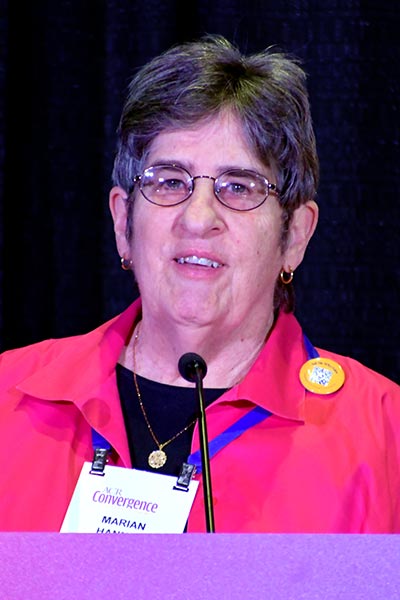
Marian Hannan, DSc, MPH, Professor of Medicine at Harvard Medical School and Senior Scientist at the Marcus Institute for Aging Research at Hebrew SeniorLife, began the epidemiology section of the ARP Year in Review with the big picture: Patients are the reason for research.
“Patient involvement changes and improves research, how it’s disseminated and put into practice,” she said, referencing recent research that touches on power dynamics and the value of patient partners and their different experiences, skills, and perspectives.
Dr. Hannan also cited a study from the United Kingdom that investigated acetaminophen use in older adults. The analyses of patients 65 and older found more side effects with increased severity associated with the agent.
“Acetaminophen exposure was associated with higher hazard ratios for perforation, ulceration, or bleeding and uncomplicated peptic ulcer,” she said. “Practitioners should think about adverse events and consider if this agent should be the first-line analgesic in their patients.”
A Canadian study that investigated osteoarthritis (OA) in young people found that, despite having symptoms, OA is often overlooked in younger adults. People who exhibited symptoms at 35 or younger had a much longer time to diagnosis, even though the symptoms and impact of OA were indistinguishable between older people and younger people.
“We need to see these invisible patients,” Dr. Hannan said. “We need to help with symptoms. We need to think about approaches to care earlier in the disease rather than waiting decades.”
Several Caribbean states have a high burden of autoimmune diseases and unmet needs for patients, along with a pressing need for medical education. Dr. Hannan noted a recent editorial in which clinicians proposed a global harmonization of rheumatology education via a free virtual platform with updatable lectures that anybody can access. The University of Pittsburgh has a similar initiative, the Supercourse, featuring more than 200,000 lectures and slides.
Rehabilitation
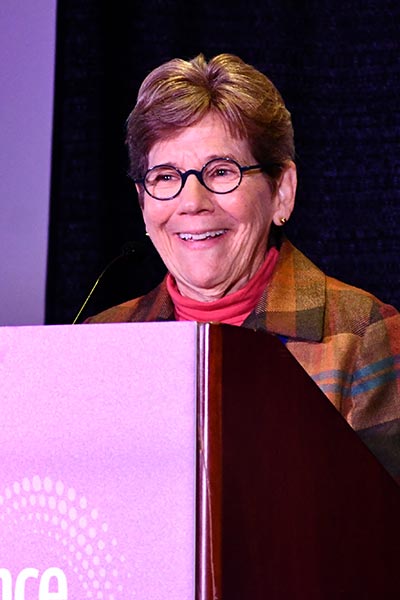
Closing the session with updates in rehabilitation, Carol Oatis, PhD, PT, Professor Emerita at Arcadia University, explored important research with an eye to the economic impact of rehab.
A pair of papers looked at gait retraining in knee osteoarthritis (KOA). In one study, the intervention group had a statistically significant decrease in pain and a decrease in the abduction moment. The second study, on the other hand, saw no significant difference between the two groups, with no significant change in the loading parameters in the intervention group.
“Walking helps, but the case for changing gait is still unclear,” Dr. Oatis said.
A real-world study Dr. Oatis shared analyzed the association between the time to referral for physical therapy (PT) and whether patients received intra-articular injections 12 to 24 months post-diagnosis, in addition to whether the dosage of PT had an association with later injections.
“Those who were referred to PT nine to 12 months after their diagnosis had a significant increase in risk of intra-articular injection down the road,” Dr. Oatis said. “I think PT timing and dose are associated with a reduction in considerably more invasive treatments down the line, and we need to help get that message out.”
A cost-utility analysis of long-term PT-supervised exercise versus usual care showed a statistically significant improvement in patient-specific complaints and multiple patient-reported outcomes at the end of the study.
“In those two groups, the results showed no statistically significant difference in cost or quality-adjusted life period between the two groups,” Dr. Oatis said. “The authors also said with 60% certainty that the intervention was cost-effective.”
A study of referral patterns for KOA PT found that of approximately 10,000 patients, about 26% were referred to PT over that year, 70% had referrals to X-rays, 40% had prescriptions for NSAIDs, and about the same number of patients who were referred to PT received intraarticular injections to the knee or prescriptions.
The bottom-line question that remains unanswered, Dr. Oatis said, is: Are most patients missing the first-line recommendation for KOA?

JOIN US IN ORLANDO
If you haven’t registered for ACR Convergence 2026, register today to participate in this year’s premier rheumatology experience, November 6–11 in Orlando, Florida. All registered participants receive on-demand access to scientific sessions after the meeting through October 31, 2027.