


Rheumatology professionals who want to enhance their ultrasound knowledge and improve their scanning techniques have two options for pre-conference learning through the Ultrasound Conferences at ACR Convergence 2025 in Chicago.
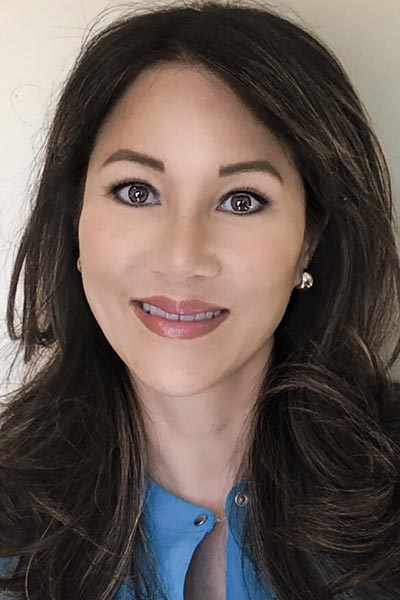
“We have a beginner course that will teach, at a well-structured pace, all the basics of ultrasound for those novice learners who have very limited experience or exposure to ultrasound,” said Janeth Yinh, MD, RhMSUS. “We’re also having an intermediate/advanced course that will cover more sophisticated uses of ultrasound and topics that are beyond musculoskeletal scanning, including vascular ultrasound, salivary gland ultrasound, and others.”
The Basic Musculoskeletal Ultrasound Course and the Intermediate-Advanced Rheumatologic Ultrasound Course will take place on October 24–25 at McCormick Place. The two-day schedule for each includes several hours of live scanning, and the intermediate-advanced course features patients with actual pathology.
“Ultrasound is all about scanning,” said Fawad Aslam, MBBS, RhMSUS, MSc, FACP, FACR. “You can do as many lectures as you want, but in the end, it’s how you practice. And more importantly, especially for the intermediate-advanced course, we will have patients with actual rheumatic pathology.”

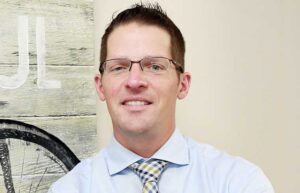
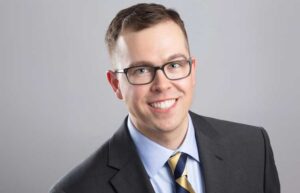
Dr. Yinh is the Chair of this year’s basic ultrasound course and the ACR Ultrasound Conferences Planning Subcommittee. Dr. Aslam is the Chair of the intermediate-advanced course. Both courses require an additional fee of $1,995 for members and $2,495 for potential members. Both courses are currently full, and so is the waitlist.
“It’s a very clinically focused ultrasound conference,” Dr. Aslam said. “We will be focusing on the common things you see in clinic — how do you interpret that finding, how do you use ultrasound for diagnosis and procedures?”
The faculty will also address changing trends, new applications of ultrasound, and how to set up an ultrasound practice, including how to acquire the appropriate equipment, how to document scans, and how to bill for these services.
“Ultrasound is becoming almost central to rheumatology,” Dr. Aslam said. “Most of the fellowships now offer it, and many diseases have ultrasound in their classification criteria, and that will continue to expand. So, it’s a very useful tool.”
To help facilitate more rheumatologists becoming certified in musculoskeletal ultrasound, the Ultrasound Conferences Planning Subcommittee has partnered with the Musculoskeletal Ultrasound Certification in Rheumatology (RhMSUS) Oversight Committee to enable participants in this year’s Ultrasound Conferences to fulfill the continuing medical education (CME) requirements to sit for the ACR’s RhMSUS exam. Certification experts will be present to provide information and guidance to attendees pursuing certification.
“The use of ultrasound and rheumatology has been growing, and the venues to learn ultrasound are somewhat limited, specifically with a rheumatology use,” Dr. Yinh noted. “There are other specialties that also teach ultrasound, but as rheumatologists, we’re more geared to doing ultrasound for inflammatory disorders.”
Seating is limited in each course level.
“We’re very mindful of the learning experience for the participants,” Dr. Yinh said. “We have hands-on workshops with a ratio of one instructor per five participants, and we allow ample time for them to practice their hands-on experience with the instructors by their side, who can teach them the technical skills and how to apply them.”

JOIN US IN ORLANDO
If you haven’t registered for ACR Convergence 2026, register today to participate in this year’s premier rheumatology experience, November 6–11 in Orlando, Florida. All registered participants receive on-demand access to scientific sessions after the meeting through October 31, 2027.