The intersection of artificial intelligence (AI) and rheumatology is shaping into a promising space, combining cutting-edge therapeutic science and medicine while showing potential for enhancing relationships between patients and clinicians.
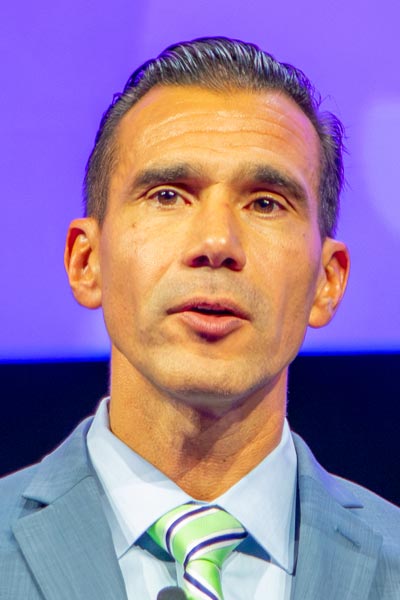
During the Opening Session at ACR Convergence 2026, Brian Anderson, MD, addressed a critical question at the forefront of rheumatology and the implementation of these tools: How can we ensure that the greater capabilities of AI serve the lives of patients? A recording of the session will be available to registered participants of ACR Convergence 2026 for on-demand viewing.
Dr. Anderson began by introducing the nonprofit organization Coalition for the Health of AI (CHAI), which he co-founded in 2021. CHAI aims to help the healthcare field establish shared expectations for the responsible development, deployment, evaluation, and use of AI. He emphasized that useful application of AI in the medical setting requires clinical expertise, technical knowledge, and patients’ experience, while noting the five core principles of CHAI: usefulness, fairness, safety, transparency, and security.
“Rheumatology has a long tradition of building consensus around evidence and outcomes,” Dr. Anderson said. “That is exactly how CHAI approaches this work as well. We want organizations to share methods, learn from one another, and produce evidence that others can expect.”
He stressed the importance of partnering with specialty societies, such as the ACR, to develop clinical standards of care and determine where AI could—or should—be used. Dr. Anderson also highlighted the need to develop educational materials to train frontline clinicians, nurses, doctors, and administrators on how to responsibly use these tools.
Dr. Anderson described the various ways in which AI is already being used to assist in the clinical setting and the advantages of utilizing AI in clinical decision-making while a patient is still in the room. OpenEvidence is one such tool that brings medical evidence into the conversation while a question is still in front of the physician, the nurse, and the patient.
“The innovation you are chartered and challenged to lead will depend on your engagement in these opportunities in research, clinical care, value alignment, and the conversations that you have with your patients.”
— Brian Anderson, MD, PhD
Another AI tool, ambient listening technology, has been shown to help clinicians listen more closely and document more accurately during patient encounters, while keeping the patient’s voice and values central to care. It effectively turns a patient visit into a draft note for the clinician to review and edit, opening up more time to focus on the patient instead of a computer screen.
“The question shouldn’t be, ‘Did ambient listening allow me to see more patients?’ The question should be, ‘Did it allow us to listen more closely and document more accurately while keeping the patient’s voice and values present in the care that follows?’” Dr. Anderson said. “Those are things we need to measure impact for in the AI tools we’re developing and using. Documentation is only one part of the work surrounding a visit. The wider opportunity is to rethink how the care team itself distributes that work.”
On the future of incorporating AI agents into the clinical setting, Dr. Anderson emphasized that the transition will likely focus on changing how teams work together as AI becomes capable of carrying out defined tasks—not replacing physicians.
He also addressed the issue of burnout and the potential of AI to help the care team complete certain tasks, allowing more time for examination, difficult interpretations, and shared decision-making with patients.
Dr. Anderson emphasized the importance of transparency in AI and using “model cards” to disclose what a given tool is intended to do, how it was evaluated, and its limitations. He also described the importance of understanding each AI agent’s workflow, permissions, and who is responsible when issues arise.
“I encourage you to lean in and be part of this conversation,” Dr. Anderson said. “The innovation you are chartered and challenged to lead will depend on your engagement in these opportunities in research, clinical care, value alignment, and the conversations that you have with your patients.”
Outside of the clinic, he noted that AI is also being utilized by scientists when determining which hypotheses warrant further testing. This workflow involves AI tools that generate, critique, rank, refine, and assist with the research hypotheses, all under scientific supervision.
“For rheumatology, the opportunity is to study whether similar assistance can help us connect findings across immunology, disease biology, and therapeutic development,” Dr. Anderson said. “This is an area where you can help lead and chart the path forward.”

THERE’S STILL TIME TO JOIN US
If you haven’t registered for ACR Convergence 2026, you can still register on-site at the Orange County Convention Center in Orlando, Florida, through November 11. All registered participants receive on-demand access to scientific sessions through September 30, 2027.