Participatory action research is a collaborative method characterized by its commitment to social change, often focused on co-learning, utilizing the community’s leadership, and relying on a continual process of action, reflection, and change. Decision-making is shared and, crucially, integrates those who are most affected by the problem.
Utilizing collaborative participatory health research methods can strengthen studies by improving enrollment and retention, and increasing the likelihood that realized solutions will be sustainable, adoptable, and translated into practice.
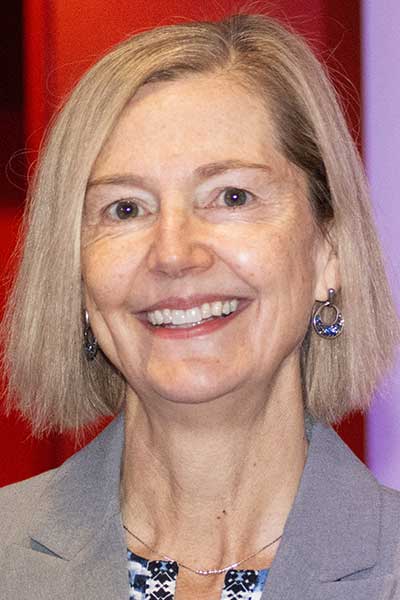
Susan Murphy, OT, ScD, Professor in the Department of Physical Medicine and Rehabilitation, and in the Rheumatology Division at the University of Michigan, delivered Monday’s ARP Distinguished Lecture: It Takes a Village: Co-Creating Health Interventions Through Collaborative Research and Community Empowerment. She illuminated how leveraging participatory research methods and positioning patients and community members as essential co-creators rather than passive recipients of medical interventions can lead to meaningful collective health solutions for complex medical challenges.
“When I think about co-creating health interventions, to me, it’s about giving others who have a stake in the research a voice as valued partners,” Dr. Murphy said. “Our patients are not just participants in research studies. They are team members and, ideally, the future users of our interventions.”
Dr. Murphy said the proverb “It takes a village to raise a child” is an apt analogy for the participatory research philosophy for developing solutions to relevant community health problems.
“The village is a collection of people who care about the success of the solution, including those most affected by the research, such as patients,” Dr. Murphy explained. “The benefit of participation is that the villagers are contributing to more rigorous research.”
She and her team applied this method while organizing and executing the RENEW study, a 12-week program designed to address fatigue among patients with systemic sclerosis (SSc). Interventions included an educational website and application, supplemented with nine virtual peer-led health coaching sessions. Results showed that RENEW participants experienced clinically meaningful fatigue improvement and that the program could be broadly scalable for SSc symptom management.
RENEW integrated patients, patient advocates, and clinicians at the outset of its development through the refinement and knowledge translation stages of the study, which led to refinements that the group likely wouldn’t have discovered otherwise.
For example, many patients with SSc don’t have fingerprints, which can make app mobility difficult. When this was revealed during user testing, the team began offering styluses and featured more button clicks than scrolling within the app design. In another instance, the leader of a male SSc group helped write an educational module for men living with the condition, who are often underrepresented in discussions about SSc because the disease primarily affects women.
“These are things I wouldn’t have thought of, but I’m really happy that the community rose up and told us what they needed,” Dr. Murphy said.
Like all initiatives that involve collaboration and relationship-building, clear, respectful communication is vital for success in participatory research. Dr. Murphy noted that being explicit about expectations for what’s being asked of community partners is a crucial early step, as it shows respect for their time and efforts.
This research framework also requires investigators to remain aware of traditional power dynamics between researchers and participants, clinicians and patients, as well as academics and laypeople. Avoiding jargon and positioning oneself as a partner rather than an authority figure can help cultivate deeper bonds. Other soft skills, such as flexibility and open-mindedness, are also crucial. Sometimes, simply telling partners that their contributions are appreciated can go a long way.
“People need to think about the art of participatory research, and the art lies in the quality of the relationships,” Dr. Murphy said. “The qualities that embody participatory research need to be consistently shown so that these connections build into healthy relationships that show trust, authenticity, and true collaboration. This builds the culture that’s needed for the success of the project.”
With this tenet in mind, it’s necessary to design methods to evaluate partnerships formed through participatory research, including qualitative feedback directly from collaborators. This provides opportunities for continual refinement and ensures community partners remain engaged.
“Participatory research isn’t just a nice idea. Engaging partners and building your village will have unintended growth and effects, and people may surprise you in new ways that they contribute to or evolve the project.”
Don’t Miss a Session
If you weren’t able to make it to a live session during ACR Convergence 2025 — or you want to revisit a session from the annual meeting — make plans to watch the replay. All registered participants receive on-demand access to scientific sessions after the meeting through October 31, 2026.