




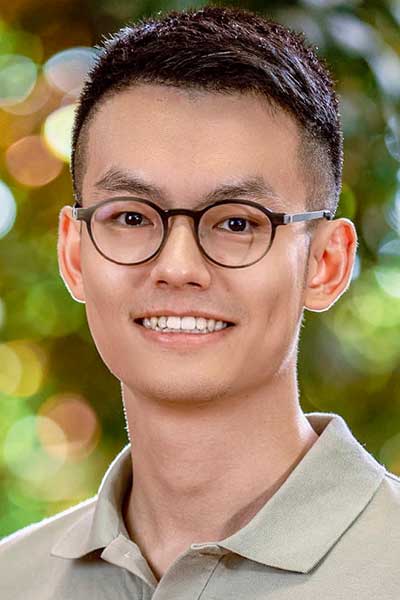
Poster Presenters: Benjamin Cai, BS, MD-PhD Student, University of Queensland Medical School CSTP and Frazer Institute, Australia; and Ranjeny Thomas, MD, Arthritis Queensland Professor of Rheumatology, Frazer Institute, University of Queensland
Poster title: Enrichment of Putative Bacteria-Reactive Gut-Derived IL-17+ Tissue Resident Memory Helper T Cells in Arthritic Ankles in the SKG Mouse Model of Spondyloarthritis
Poster Session A: 10:30 a.m.–12:30 p.m. on Sunday, October 26
What is your poster about?
“My poster explores how a gut bacterium, Parabacteroides goldsteinii, drives inflammation in the gut and joints in the SKG mouse model of spondyloarthritis. Specifically, we show that IL-17⁺ T cells that originate in the gut accumulate and reside in arthritic ankles, suggesting a direct link between how immune cells controlling bacteria in the gut mucosa can get out of control in the joints, perpetuating inflammatory arthritis.”
Why did you decide to investigate this topic?
“Spondyloarthritis is strongly associated with gut inflammation and HLA-B27, but the mechanisms connecting gut microbes, T cells, and joint disease are poorly understood. We recently published a study in JCI Insight showing that in genetically susceptible SKG mice, gut bacteria cross into the ileal mucosa, where they are captured by macrophages and neutrophils and transported to the joint tendons and bone marrow. What is interesting is that bacteria are captured in the gut of both healthy and arthritic mice, but the cells capturing them differ: pro-inflammatory in arthritis and pro-tolerance in health. In this study, we study the responding T cells and the roles they play in different organs.”
What are you working on next related to this research?
“Our next steps are to define whether these IL-17⁺ T cells recognize microbial antigens and to explore whether comparable signatures are present in huma spondyloarthritis. This will underpin research aimed at regulating these T cells through immunotherapy.”
What excites you most about your work?
“It is well established that gut and joint inflammation frequently occur together in spondyloarthritis, but the mechanisms driving this link remain poorly understood. During my PhD so far, I have been able to demonstrate in an animal model that a single bacterium can orchestrate both innate and adaptive immune responses to drive disease. What excites me most is the possibility of moving beyond broad immunosuppression toward therapies that precisely target disease-relevant T cells or their microbial triggers in people living with diseases like ankylosing spondylitis.”
What are you most looking forward to at ACR Convergence 2025 in Chicago?
“I look forward to sharing our findings with colleagues, learning from the latest advances in clinical rheumatology and research. I’m also very excited to network with scientists and clinicians to build collaborations that will help to advance the biological basis of disease and to translate findings into practice.”

JOIN US IN ORLANDO
If you haven’t registered for ACR Convergence 2026, register today to participate in this year’s premier rheumatology experience, November 6–11 in Orlando, Florida. All registered participants receive on-demand access to scientific sessions after the meeting through October 31, 2027.