

Pulmonary sarcoidosis was first described nearly 150 years ago, yet treatment has changed little over the decades. Systemic steroids have remained the mainstay of therapy despite their well-known long-term side effects. The first phase 3 clinical trial for sarcoidosis — intravenous efzofitimod — was completed in July 2025.
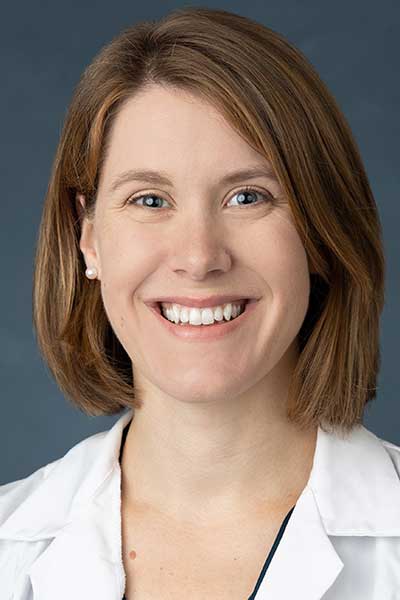
“Based on our guidelines, first-line therapy for sarcoidosis is glucocorticoid steroids, which are not ideal for chronic use,” said Michelle Sharp, MD, MHS, Associate Professor of Medicine at the Johns Hopkins University School of Medicine and Co-Director of the Johns Hopkins Sarcoidosis Center. “The trial of intravenous efzofitimod is novel and exciting. Completing the trial gives us hope that maybe we’ll have an FDA-approved treatment outside glucocorticoid steroids.”
Dr. Sharp will open the session Breathing New Life into Pulmonary Sarcoidosis: Updates and Ongoing Challenges in Evaluation and Treatment of Disease with an assessment of the latest advances in better understanding the multiple phenotypes of pulmonary sarcoidosis. Robert Baughman, MD, PhD, Emeritus Professor of Medicine at the University of Cincinnati, will discuss the latest advances in treatment. The session will be held on Sunday, October 26, from 3–4 p.m. in Room W375B of McCormick Place. On-demand access to recorded presentations will be available to registered participants of ACR Convergence following the annual meeting through October 31, 2026.
“One of the biggest challenges in sarcoidosis is the heterogeneity, and that it is likely more than one disease,” Dr. Sharp said. “Multiple immune pathways are implicated in the development of sarcoidosis. In order to understand the underlying immune dysfunction, we need to do a better job of phenotyping patients.”
While pulmonary sarcoidosis has historically been described as restrictive lung disease, it can also manifest as an obstructive lung disease, or isolated reduction in diffusion capacity (which is likely a pulmonary vascular phenotype). There is also a combined obstructive-restrictive phenotype, which appears to have the worst outcomes.
The Genotype-Phenotype Relationship in Sarcoidosis (GenPhenReSa) study, a multicenter European initiative involving 31 centers, is advancing efforts to disentangle the genetic and geographic influences on disease phenotype.
“Sarcoidosis is thought to arise in genetically susceptible individuals following exposure to a trigger,” Dr. Sharp explained. “Not all individuals exposed to a potential trigger develop sarcoidosis, and not all individuals with genetic susceptibility manifest the disease. This underscores the importance of the gene-environment interaction in disease pathogenesis. Large, diverse cohorts are essential to disentangle these interactions and to define the mechanisms of immune dysregulation that drives sarcoidosis.”
Sarcoidosis is often described as a disease of disparity. In the United States, Black women and low-income populations show higher incidences of pulmonary and other forms of sarcoidosis compared to the general population. How those prevalence patterns are affected by ancestry genetics and toxic environmental exposures more likely to affect marginalized communities is not clear.
“If you look across the world, any marginalized population has a higher prevalence of sarcoidosis,” Dr. Sharp said. “It is important to note that sarcoidosis can affect anyone, of any race or ethnicity. Interestingly, Japan has one of the largest cohorts of cardiac sarcoidosis.”
The literature suggests males have an earlier onset of sarcoidosis at 30–50 years of age compared to 50–65 years for females. There have been suggestions that estrogen could be protective, although it is a female-prevalent disease over the lifespan.
“There is so much we don’t know in the world of sarcoidosis and so much work to do,” Dr. Sharp said. “The most important thing in diagnosing sarcoidosis is making sure it’s not something else. A surprising number of patients referred to us after being treated for sarcoidosis for years turned out to have something else, including lymphoma. Taking care of patients with sarcoidosis requires a bit of detective work to ensure the diagnosis is correct and to determine which organs may be involved.”
For the first time in decades, Dr. Sharp said, sarcoidosis research and treatment are on the cusp of real change.
“With a growing understanding of the phenotypes and the emergence of possible new therapies, I truly believe we are entering a new era in sarcoidosis care,” she said.
Don’t Miss a Session
If you weren’t able to make it to a live session during ACR Convergence 2025 — or you want to revisit a session from the annual meeting — make plans to watch the replay. All registered participants receive on-demand access to scientific sessions after the meeting through October 31, 2026.