

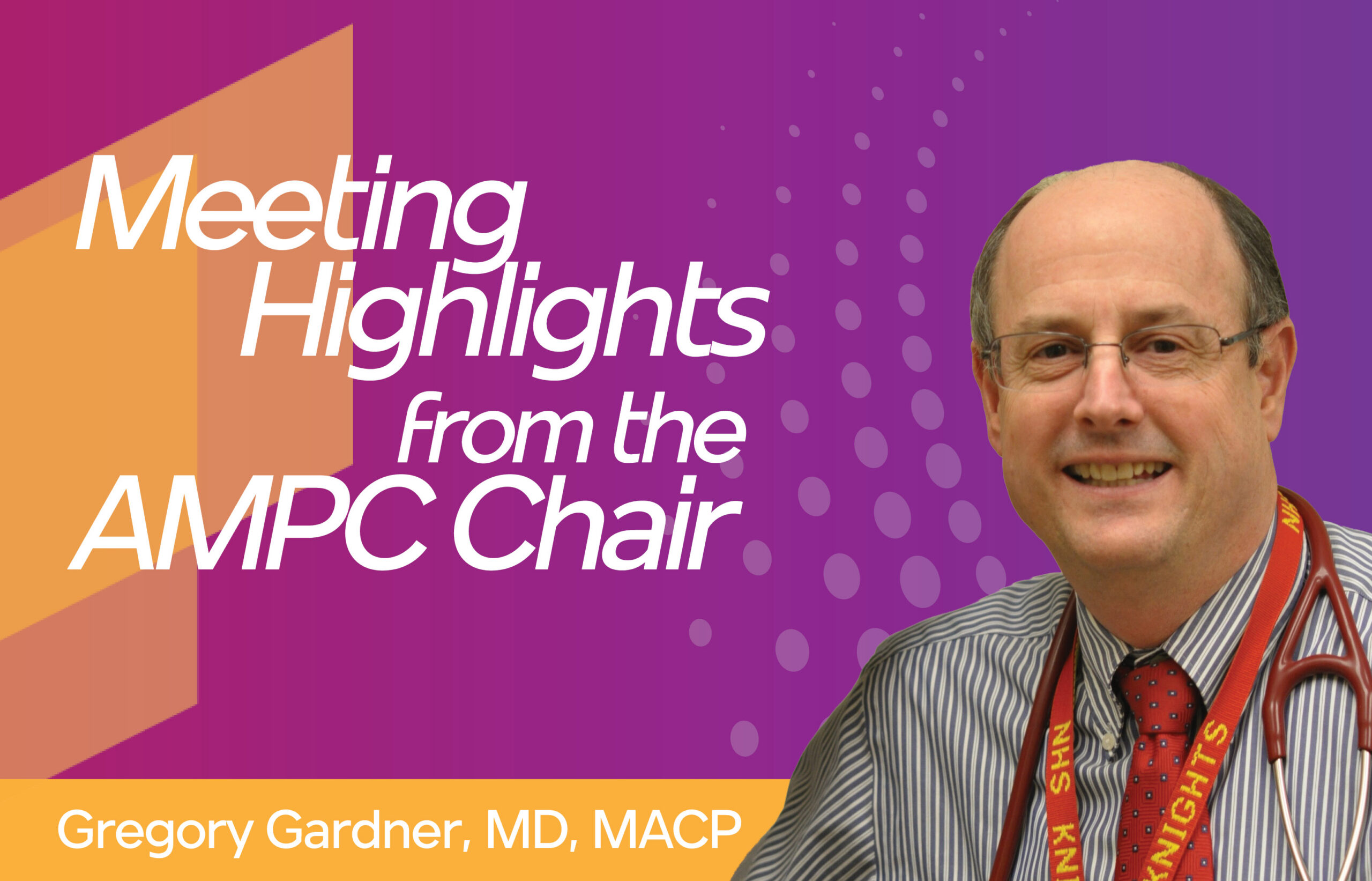
A message from Annual Meeting Planning Committee Chair Gregory Gardner, MD, MACP
We are about four months away from our marquee event presenting the latest breakthroughs in rheumatology, covering both foundational science and clinical care. The Annual Meeting Planning Committee (AMPC) has crafted another world-class scientific program, and I hope you will join us Friday–Wednesday, November 6–11, in Orlando, Florida, to take part in ACR Convergence 2026. You can register today.
One of the strengths of ACR Convergence is its continued emphasis on the high-quality science moving rheumatology forward and disseminating new knowledge and new ways of thinking about the diseases our patients face.
The meeting is structured so that all rheumatology professionals benefit from attending, including MDs, DOs, ARNPs, PAs, RNs, social workers, pharmacists, OTs, PTs, and psychologists. All of these groups benefit in terms of new knowledge, but we also recently received accreditation for more attendees, meaning non-physicians can receive continuing education credits for attending, whereas before only CME and MOC were offered. Credits can be applied for board recertification in many cases. We have to thank our outstanding ACR staff who made this happen.
In broad terms, ACR Convergence 2026 will have the same format as last year, with some great additions. We have reduced the total number of sessions to minimize “overload” while maximizing the on-site experience.
I am very excited about our themed sessions. For the first time at ACR Convergence, we have a series of three sessions—one each day at 1 p.m. during the first three days of the scientific sessions, November 8–10— that cover a specific topic. This year we have chosen Cellular Immunotherapy: Are We on the Cusp of a Therapeutic Revolution in Rheumatology? These sessions were developed by our AMPC teams to meet the needs of a diverse rheumatology audience and will cover all aspects of these emerging therapies, including basic science, teaching the immunology of cellular therapies to the next generation, outcomes of the therapies, requirements for most of the current trials and where to find them, and more. We will end on day three with a debate from two notable immunologists in the field discussing whether to implement these therapies rapidly or exercise caution.
We have five other joint sessions that will address issues of interest to multiple groups. An example is the Monday session Fat, Fate, and Flares: Adipose-Derived Cues in Autoimmunity, developed by our Basic Science, ARP, and Clinical Science teams. Another key session will be a joint session on Tuesday developed by the Pediatric and Workforce and Education teams titled Moving Towards Competence: Building Flexible Pediatric Rheumatology Training Pathways for Fellows. This is especially apropos in light of the recent change in required years for pediatric rheumatology fellowship. Be on the lookout for these and other interesting joint sessions.
We are also bringing back Workshops in 2026, an offering not available since before the COVID-19 pandemic. Two Ultrasound Workshops take place on Sunday and require an additional fee.
There are several mainstay sessions to highlight as well, starting with preconference programming. On Saturday before the scientific sessions begin, there is a clinical Review Course and the Basic and Clinical Research Conference, which are available to those with the In Person Plus pass at no additional charge. For the second year, we are also offering a Practice Innovation Summit that takes place on Friday and Saturday for an additional fee. Preconference courses also include basic and intermediate/advanced Ultrasound Conferences that usually sell out early, so if you are interested, register ASAP!
We have five memorial lectures lined up featuring an outstanding group of speakers:
- Paul Klemperer Memorial Lecture – Virginia Pascual, MD
- Oscar Gluck Memorial Lecture – Polly Ferguson, MD
- Philip Hench Memorial Lecture – John Varga, MD, MACR
- Edmund Dubois Memorial Lecture – Amr Sawalha, MD
- Rheumatology Research Foundation Memorial Lecture: To Memorialize Dr. Elizabeth Mellins – Grant Schulert, MD, PhD
Most of the memorial lecturers are pediatric rheumatologists and/or academically tied to pediatrics in honor of the official 50th anniversary of pediatric rheumatology. All will present topics of interest to all rheumatology professionals, not just pediatric rheumatologists. For example, Dr. Ferguson will discuss inflammatory bone disease, a group of disorders seen in both pediatric and adult rheumatology patients. We will also have some special sessions to commemorate this momentous anniversary beyond the memorial lectures, including the Sunday session titled Mastering the Field of Pediatric Rheumatology: Pioneers and Progress, 50th Anniversary.
Our exploration of artificial intelligence (AI) in rheumatology continues as well, with a Sunday session developed by our Workforce and Education team titled Medical Education Great Debate: AI for Evil, AI for Good. On Tuesday, Journal Club with the Editors: Effective and Appropriate Use of Big Datasets and AI in Research Publishing, developed by S. Louis Bridges Jr., MD, PhD, MACR, editor of Arthritis & Rheumatology, and Josef Smolen, MD, editor of Annals of Rheumatic Diseases, will discuss threats to research integrity in rheumatology journals, including the use of AI. The Basic and Clinical Research Conference on Saturday is about using AI in both areas of research.
We have a great lineup of topics and speakers for the add-on Meet the Professor sessions this year, too, including rheumatoid arthritis, interstitial lung disease (ILD), vasculitis mimics, inflammatory eye disease, lupus nephritis, and several more.
The ARP team does a great job with the Radiology Bootcamp on Saturday, which this year will be an extension of the always-great Review Course. In addition, the ARP team is again including a STATS Bootcamp on Monday to discuss how to plan, inspect, and visualize clinical data and an Immunology Bootcamp in two sessions, on Sunday and Monday, to discuss fundamentals of immunology. These are well-attended sessions, so get to the session room early to find your seat.
Our Basic Science team always provides key scientific updates, which this year includes sessions on the fundamental science of myositis, sarcoidosis, psoriasis, Sjögren’s disease, and systemic sclerosis. One of the key basic science sessions is Bridging the Great Divide: Identifying Common Pathways Across Diseases through the Accelerating Medicine Partnership on Sunday. It should appeal to a large audience.
Also on Sunday, the Year in Review will highlight two outstanding speakers with Liana Frankel, MD, MPH, presenting the clinical year in review, and William H. Robinson, MD, PhD, discussing the key literature on the basic science side.
We will again have three plenary sessions, one each on Sunday, Monday, and Tuesday, that will highlight key science and should be on everybody’s radar.
And who doesn’t like the Knowledge Bowl, where 16 teams of fellows from all around the world can test their knowledge of rheumatology? Come cheer on your team in the preliminary round on Sunday or in the finals on Monday. On Tuesday, the Pediatric team will again have an interactive session using the Kahoot! platform, similar to a knowledge bowl but using a fun audience response system that allows the entire audience to participate. I have attended for the last two years, and even as an adult rheumatologist, I did not do too badly, so I encourage you to test your mettle. Curbside Consults on Monday, Thieves Markets on Sunday and Monday, and the Clinicopathologic Conference on Tuesday are other engaging and popular mainstays.
The guidelines sessions are key for any practicing rheumatology professional, and the ACR guideline updates are frequent activities at ACR Convergence. The following guidelines will be discussed at ACR Convergence 2026:
- Updated guideline for the treatment of axial spondyloarthritis (axSpA) in adults and new juvenile SpA guideline
- New ACR guidelines for the treatment of osteoarthritis
- Further discussion of the ACR’s SLE guidelines
As you build your meeting itinerary, choose the sessions that match your field or area of interest, including the oral abstract sessions, where you will hear the latest science in your field. Also plan to attend a few activities that are new to you or out of your comfort zone to see what is happening in the rest of rheumatology. Choose wisely and don’t try to do too much! Remember that recordings of many, but not all, of the major sessions will be available to registered participants after the meeting for on-demand viewing. I suggest each ACR Convergence participant plan to attend:
- Year in Review
- At least one plenary session
- At least one memorial lecture
- The late-breaking abstracts session
- At least one guideline session
- At least one Great Debate, in adult medicine, pediatrics, or medical education
- As many of the poster sessions as time allows, to mingle and chat with the presenters and see what is happening in your field and beyond
- Cellular Immunotherapy: Are We on the Cusp of a Therapeutic Revolution in Rheumatology?
And finally, Orlando is an amazing location for a meeting. The weather is usually great, and there are many family-oriented activities. We have lightened the afternoon load a bit in anticipation of attendees and families spending some time in the local parks. I look forward to seeing you in November.
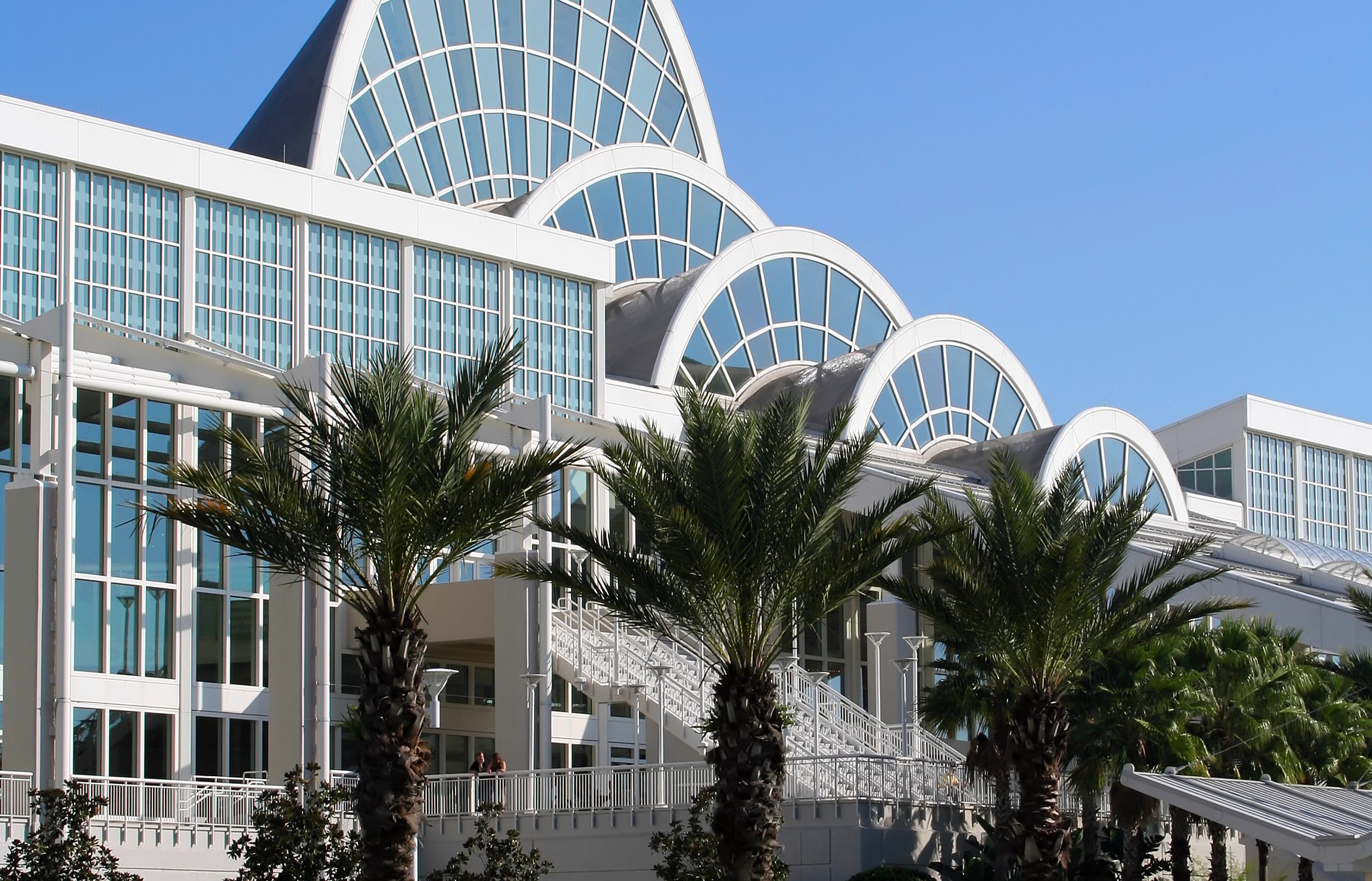
JOIN US IN ORLANDO
If you haven’t registered for ACR Convergence 2026, register today to participate in this year’s premier rheumatology experience, November 6–11 in Orlando, Florida. All registered participants receive on-demand access to scientific sessions after the meeting through September 30, 2027.