


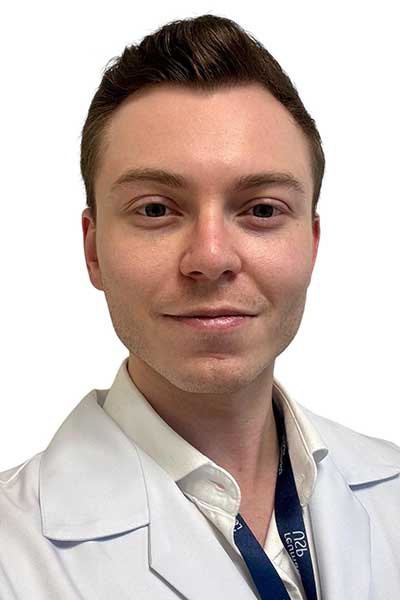
Poster presenter: Rafael Bassara Macedo, MD, Rheumatology Fellow, São Paulo University, Brazil
Poster title: Gender-Based Clinical Differences in Behçet’s Syndrome: Findings from a 24-Year Cohort in a Non-Endemic and Multiethnic Country
Poster Session B: 10:30 a.m.–12:30 p.m. on Monday, October 27
What is your poster about?
“Our poster presents the largest South American cohort study examining gender-specific manifestations in Behçet’s syndrome. We analyzed 303 patients over 24 years, revealing that while men more commonly develop severe complications like vascular thrombosis, arterial aneurysms, and sight-threatening ocular disease, women predominantly experience mucocutaneous lesions, arthritis, and fibromyalgia. Despite being labeled as ‘milder,’ these female-predominant manifestations significantly impact quality of life and may lead to undertreatment.”
Why did you decide to investigate this topic?
“Gender differences in Behçet’s syndrome have been well-documented in endemic regions like the Mediterranean and Middle East, but data from non-endemic, multiethnic populations like Brazil was lacking. As rheumatologists treating a diverse patient population, we noticed patterns that seemed to mirror international findings, but we wanted to provide robust evidence from our region. Understanding these differences is crucial for optimizing treatment approaches and ensuring we don’t underestimate the impact of seemingly ‘benign’ manifestations on our patients’ lives.”
What are you working on next related to this research?
“We’re planning to investigate the central nervous system sensitization hypothesis we proposed, specifically examining whether arthritis in female Behçet’s patients contributes to fibromyalgia development. We’re also developing treatment protocols that address the quality-of-life impact of mucocutaneous and musculoskeletal manifestations more aggressively, moving away from the traditional perception that these are ‘minor’ compared to major organ involvement.”
What excites you most about your work?
“What excites me most is the potential to change clinical practice patterns. Our data suggests we may be inadvertently undertreating female patients because their manifestations appear less severe. By highlighting how conditions like fibromyalgia and recurrent ulcerations profoundly affect quality of life, we can advocate for more personalized, gender-informed treatment approaches that address the full spectrum of disease impact.”
What are you most looking forward to at ACR Convergence 2025 in Chicago?
“I’m most looking forward to the discussions our poster will generate with international colleagues. Behçet’s syndrome research has been dominated by studies from endemic regions, so presenting data from a non-endemic, multiethnic population like Brazil offers a unique perspective. I’m excited to hear how our findings compare with other regions and to collaborate on developing more inclusive, globally applicable treatment guidelines that consider both gender differences and regional variations in disease presentation.”

JOIN US IN ORLANDO
If you haven’t registered for ACR Convergence 2026, register today to participate in this year’s premier rheumatology experience, November 6–11 in Orlando, Florida. All registered participants receive on-demand access to scientific sessions after the meeting through October 31, 2027.