

Juvenile idiopathic arthritis (JIA) is one of the most common chronic illnesses of children, causing not only physical pain for young patients, but also mental, physical, and financial distress for their families.
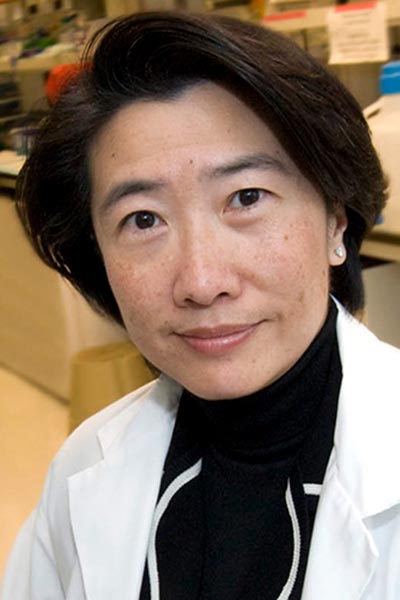
In 2009, the Understanding Childhood Arthritis Network (UCAN), an international consortium of organizations involved in childhood arthritis care and research, agreed that a common priority should be determining the biologic basis of clinical heterogeneity in JIA, explained Rae Yeung, MD, PhD, Professor of Pediatrics, Immunology and Medical Science at the University of Toronto, Canada, and Senior Scientist in Cell and Systems Biology Research at The Hospital for Sick Children, University of Toronto. Once they had built a standardized research infrastructure, a variety of research projects began.
One of these is the Canada-Netherlands Personalized Medicine Network in Childhood Arthritis and Rheumatic Diseases (UCAN CAN-DU), a multi-site research program. On Monday, October 27, from 10–11:30 a.m. in Room W471B in McCormick Place, during the session Toward a Cure for Childhood Arthritis, three members of UCAN CAN-DU will discuss their findings on behalf of the network’s leadership team.

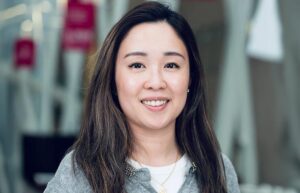
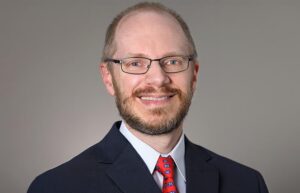
The speakers include Dr. Yeung, Sebastiaan Vastert, MD, PhD, Pediatric Rheumatologist, Head of the Department of Pediatric Rheumatology & Immunology, Wilhelmina Children’s Hospital, Utrecht, the Netherlands, and Deborah Marshall, PhD, Professor and the Svare Chair of Health Economics, Value and Impact, Cumming School of Medicine, University of Calgary, Canada. Susa Benseler, MD, and Joost Swart, MD, are also members of the UCAN CAN-DU leadership team.
Through UCAN CAN-DU, a novel eHealth platform facilitates the integration of biology with clinical data, patient-reported outcomes, and health economics, enabling precision medicine and the delivery of targeted therapies, Dr. Yeung explained.
“This comprehensive integration of biology opens the door not only to understanding arthritis, but it’s actually the next step to a cure, because when you can start the right medication early, we have data from our team that you can actually also stop early in the right subset of children,” Dr. Yeung said. “If this disease remission is sustained, and you remain in remission, you might actually be cured of the disease.”
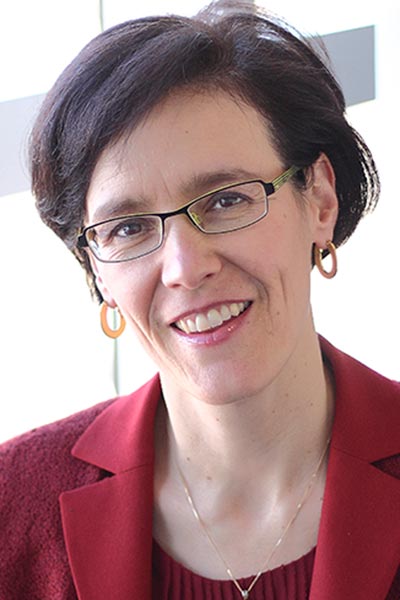
For 20 years, it’s been known that the systemic features of JIA, particularly fever, are driven by the inflammatory cytokine interleukin-1 (IL-1), which can be blocked by a biological drug, Dr. Vastert explained. Yet there are jurisdictional differences in access to these medications, specifically early in the disease.
In the Netherlands, patients with this rare subtype can now be treated with IL-1 therapy first, with remarkable clinical responses in the majority of patients.
Compared to the previous treatment, which required corticosteroids often in conjunction with methotrexate as first-line treatment, Dr. Vastert explained, “We got really high response rates with a targeted therapy very early in the disease. But we were also able to taper and stop successfully a maintenance treatment in over 50% of patients.”
With more than five years of follow-up, researchers have found that over 90% of initially well-responding patients have maintained their remission over time.
“We can now suggest that some of these patients might even be cured,” Dr. Vastert said.
For the first time, UCAN is reporting the comprehensive impacts of JIA for children and their families, including the physical, mental, emotional, and financial burden aspects. Using patient-reported outcome data, collected from surveys of young patients and their parents at critical decision points in their disease trajectories, has helped the UCAN CAN-DU team understand these impacts on families.
“(The research) revealed to us the magnitude of the impacts and shows that parents of children with arthritis struggle. Almost half of them report significant mental and physical health impairments,” Dr. Marshall said. “One in five parents report that they don’t have any support to care for their child.”
This leads to missed work and impaired functioning even when the parents are at work. In addition, families pay about $1,200 a year in out-of-pocket costs, she said. For some families, out-of-pocket costs can range up to $250,000. Importantly, these costs reflect jurisdictional differences.
For the children, there is pain, lack of mobility, and a restriction of daily school and work activities. Dr. Marshall explained that for some children, the quality-of-life impacts are comparable, or potentially even worse, than childhood cancer.
“UCAN exemplifies the team science approach to translational research that leads to the paradigm change,” Dr. Yeung said. “We’re excited because our results give us hope and a glimpse of what a cure might actually look like for childhood arthritis.”
On-demand access to recorded presentations will be available to registered attendees of ACR Convergence following the annual meeting through October 31, 2026.

JOIN US IN ORLANDO
If you haven’t registered for ACR Convergence 2026, register today to participate in this year’s premier rheumatology experience, November 6–11 in Orlando, Florida. All registered participants receive on-demand access to scientific sessions after the meeting through September 30, 2027.