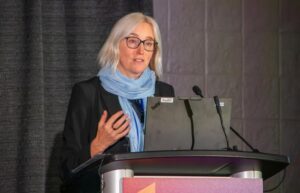
A new draft ACR consensus statement will help guide rheumatologists in caring for their patients with rheumatoid arthritis (RA) to prevent and manage atherosclerotic cardiovascular disease (ASCVD).
The session, featuring many of the committee members who drafted the Consensus Statement on RA and ASCVD, will take place Tuesday, November 10, from 10–11:30 a.m., in Room W109 of the Orange County Convention Center. A recording of ACR Rheumatoid Arthritis Cardiovascular Clinical Consensus Statement: Committee Report and Panel Discussion will be available to registered participants of ACR Convergence 2026 for on-demand viewing.
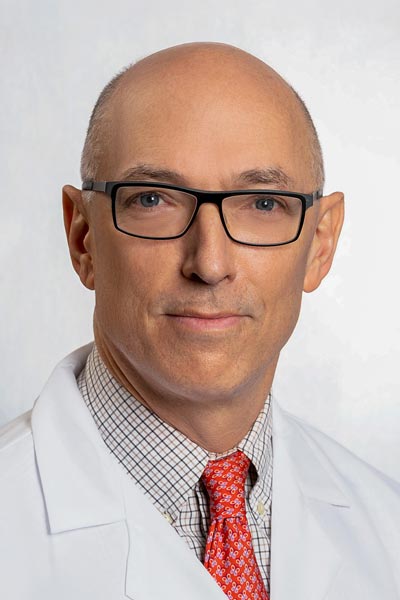
Daniel H. Solomon, MD, MPH, who was one of the committee leads, said the clinical consensus statement will give rheumatologists evidence to feel confident about making cardiology-related decisions, such as which patient should get a coronary artery calcium score or whether a patient should start a statin. The statement will speak to the holistic role that rheumatologists typically play in the lives of their patients.
The 12-member committee is made up of eight rheumatologists and four cardiologists. Tuesday’s session will offer an overview of the clinical consensus statement and the four task forces within the committee—ASCVD Risk Factors, Risk Scores, CV Imaging, and Medications—and will describe the evidence that informed the statement.
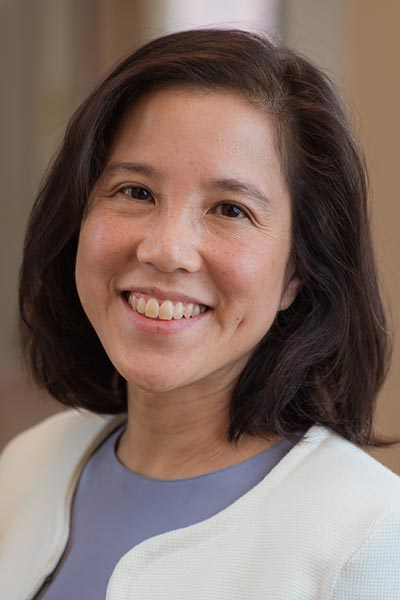
“We now have a body of data that we reviewed as a committee and propose consensus statements about what a rheumatologist and/or a cardiologist should consider for their patient with RA,” said committee member Katherine Liao, MD, MPH, Rheumatologist and Clinical Investigator at Brigham and Women’s Hospital, and Associate Professor of Medicine and Biomedical Informatics at Harvard Medical School. “There’s a lot of rich data, a lot of recent data, that we worked to synthesize and distill down for clinical care.”
Dr. Liao will represent the task force on cardiovascular risk scores. Rheumatologists often don’t consider risk stratification for ASCVD as much as primary care clinicians or cardiologists, she said, and early data from the few studies completed have consistently shown that even the recently updated ASCVD prevention risk calculators underestimate the burden of RA on ASCVD risk.
Committee member Brittany Weber, MD, PhD, Director of the Cardio-Rheumatology/Cardio-Dermatology Program and Assistant Professor of Medicine and Dermatology in the Department of Internal Medicine at UT Southwestern Medical Center, Dallas, will discuss when CV imaging can add useful information beyond traditional risk assessment for patients with RA and best practices for rheumatologists using CV imaging.

Dr. Weber hopes the statement helps clarify what rheumatologists can and should incorporate into daily practice. There’s been tremendous progress in understanding the relationship between inflammation and ASCVD, and the challenge is translating that into caring for patients, she noted.
“Traditional cardiovascular risk factors still matter enormously, but they do not always capture the additional risk associated with chronic systemic inflammation and RA-specific factors,” Dr. Weber said. “Our goal was to help clinicians think about how conventional risk assessment, disease-related factors, imaging, and preventive therapies can be integrated into a practical framework.”
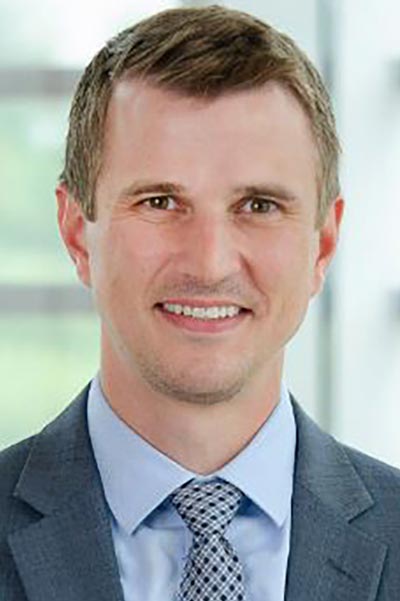
Assistant Professor of Medicine at the University of Nebraska Medical Center, Omaha, Tate Johnson, MD, PhD, will talk about the work of the medication task force, which evaluated available data on the effects different classes of medications showed on ASCVD risk and RA. The task force reviewed nonsteroidal medications and corticosteroids, conventional and biologic DMARDs, and statins and lipid-lowering therapies.
Dr. Johnson also highlighted the need for more research, stating, “We feel this statement helps to both synthesize the available data for practical clinical use and create a call to action and research agenda for what needs to happen moving forward. This statement is meant to be updated over time.”

THERE’S STILL TIME TO JOIN US
If you haven’t registered for ACR Convergence 2026, you can still register on-site at the Orange County Convention Center in Orlando, Florida, through November 11. All registered participants receive on-demand access to scientific sessions through September 30, 2027.