In 1976, at a meeting of the American Rheumatism Association, the precursor to the American College of Rheumatology (ACR), in Park City, Utah, a group of clinicians and scientists established pediatric rheumatology as a recognized specialty. Some of those pioneers and ACR masters will lead a professional development session on Sunday morning, November 8, recognizing 50 years of discovery and innovation, and looking toward the future of caring for children and adolescents living with rheumatic disease. Mastering the Field of Pediatric Rheumatology: Pioneers and Progress, 50th Anniversary will take place from 8:30–10 a.m. in Room W414 of the Orange County Convention Center.
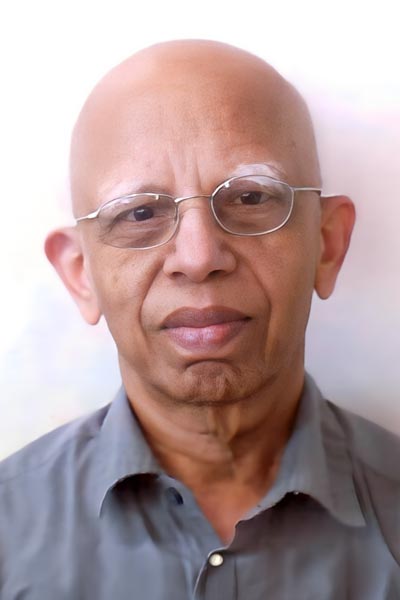
“This is a celebration of the 50th year of pediatric rheumatology. It should be a fun time and a time to reminisce,” said Balasubramania “Balu” Athreya, MD, MACR, Emeritus Professor in the Department of Pediatrics at the University of Pennsylvania School of Medicine and Thomas Jefferson University. “For somebody like me who was there in the beginning, it is a great time for meeting the younger people who are now taking charge and leading the growth of the field.”
Dr. Athreya, who attended the landmark Park City meeting and was instrumental in developing the guiding principles of the Childhood Arthritis and Rheumatology Alliance (CARRA), will share what treating children was like before pediatric rheumatology was an established field.
“There was not even a knowledge base,” Dr. Athreya said. “There was a time when we did not even know the existence of many diseases, such as Kawasaki disease and Lyme disease, and we did not have many medicines, either. There was no pediatric rheumatology as a specialty. None of us had formal training.”
With a better understanding of the history of the field, Dr. Athreya hopes attendees will gain a fresh sense of optimism.
“There’s plenty to be glad about,” he said, citing significant decreases in young patients undergoing joint replacement surgery or with eye disease. “We have come a long way in terms of recognition of more and more diseases, a better classification system, better medicines, but we have a long way to go because we still don’t fully understand the mechanisms of many of these diseases.”
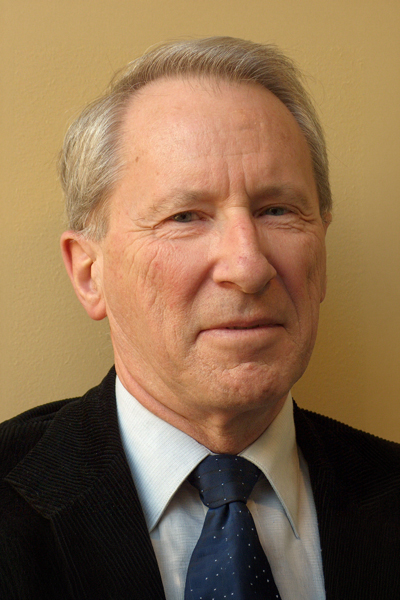
Another pediatric rheumatology pioneer, Ross Petty, MD, PhD, FRCPC, DSc, MACR, Professor Emeritus in the Department of Pediatrics at the University of British Columbia at Vancouver, Canada, will map the path taken to classifying juvenile idiopathic arthritis (JIA), unifying divergent sets of criteria used in North America and Europe.
“It became evident that, although an increased amount of research and attention was being given to juvenile arthritis, it was impossible to compare studies because they were using different criteria to define the disease and types of disease,” Dr. Petty explained.
The International League of Associations for Rheumatology (ILAR) classification began to solve that problem at a meeting in Santiago, Chile, in 1994. It has since been modified twice, in 1997 and 2001, and over the summer, a group met in Milan, Italy, to discuss possible additional revisions.
“It’s astonishing where we started and how far the discipline has come,” Dr. Petty said. “The question of classification was a necessary step to facilitate research into what is the most common rheumatic disease of childhood, which we now call JIA.”
While Dr. Petty hasn’t been involved in the direct care of young people living with rheumatic disease in recent years, he said he was impressed with the pace at which new treatments are being developed.
“The application of biologics has totally revolutionized the management, and consequently, the outcomes of disease,” Dr. Petty said. “So, for the patient who has JIA today, it’s a much better story than it was when I entered the field 50 years ago.”
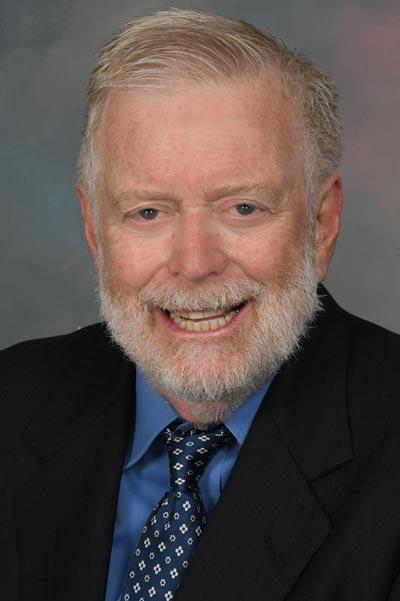
Daniel Lovell, MD, MPH, MACR, the Joseph E. Levinson Professor of Pediatrics at the University of Cincinnati Medical Center, will share insights from his first-hand experiences with the biologics revolution in JIA.
“I’ll try to span from the beginning, from the first trial through our current status, which, fortunately, gives us a lot of options,” Dr. Lovell said. “Because I was present at the first trial and helped run it, I will offer perspectives on how that evolved and what it meant for children, comparing pre-biologic status of children to post-biologic status, and then summarize where we are at the current time with treatment choices and unanswered questions.”
Clinical trials are essential to the ability to treat children, he said.
“It was only through people being willing to do the extra work of clinical trials that we have the treatment options we have today,” Dr. Lovell noted. “And the reality is that we’re not done. There are still kids who don’t respond to our current treatment. We don’t have a reliable way to get kids off of biologic treatment, so we need to figure that out as well. It’s through individuals being willing to work in research consortiums and enroll patients in trials that we’ve been able to make the advancements we have.”
Christy Sandborg, MD, FACR, MACR, FAAP, Professor of Pediatrics Emerita at Stanford University School of Medicine, will provide a retrospective of investigative research in academia and patient-centered collaborations.

THERE’S STILL TIME TO JOIN US
If you haven’t registered for ACR Convergence 2026, you can still register on-site at the Orange County Convention Center in Orlando, Florida, through November 11. All registered participants receive on-demand access to scientific sessions through September 30, 2027.