Since 2015, when Amr Sawalha, MD, discussed the role of genetic variability and epigenetic changes in lupus development at the Edmund Dubois Memorial Lecture, knowledge about the genetics and epigenetics of the disease has grown rapidly.
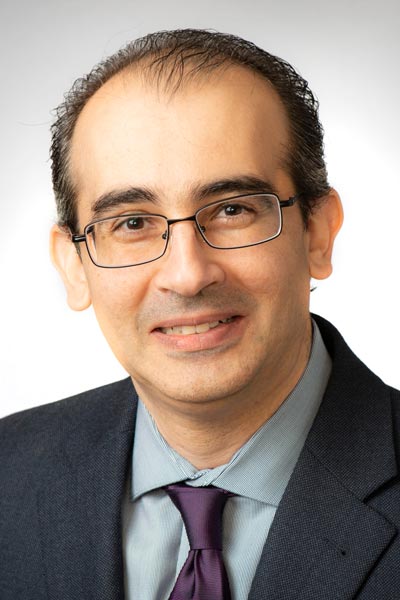
Dr. Sawalha will review many of those advances at ACR Convergence 2026 during his second Dubois Lecture. “From Genes to Environment: Epigenetic Regulation and Gene-Environment Interactions in Lupus” will take place on Monday, November 9, from 2:30–3:30 p.m., in Room W415D of the Orange County Convention Center. A recording of the lecture will be available to registered participants of ACR Convergence 2026 for on-demand viewing.
This year’s lecture will review recent research and increased understanding about the genetics and epigenetics of the disease. Dr. Sawalha will also discuss translational insights to improve patient care.
“We know much more now about how genetics and epigenetics can explain or help explain disease mechanisms and also shed light on clinical observations that we see in the clinic,” he noted.
Dr. Sawalha serves as Director of the Division of Rheumatology at Children’s Hospital of Pittsburgh and Director of the Lupus Center of Excellence, which brings together the research and clinical efforts of the University of Pittsburgh Medical Center with the University of Pittsburgh. His research team concentrates on the pathogenesis of systemic autoimmune and inflammatory diseases, including lupus, using genomic, epigenomic, and bioinformatics methodologies.
The Lupus Center of Excellence’s research involving animal models has identified a promising novel therapeutic target, an epigenetic modulator called enhancer of zeste homolog 2 (EZH2), and a possible linking of environmental triggers for lupus through epigenetic mechanisms to EZH2. Research continues into how increased EZH2 leads to T cell dysfunction or B cell abnormalities that cause disease.
“If you understand how it causes disease, then you can target those pathways, and then maybe have more effective and safer treatments,” Dr. Sawalha said.
Additional translational insights include the role of environmental factors in lupus, an area that researchers still don’t completely understand. The incidence of autoimmune disease in the United States has increased without a change in the genetics, Dr. Sawalha said, which suggests a possible influence from the environment.
“Epigenetics provides an avenue or a mechanism whereby environmental factors and the mechanisms of environmental factors toward causing the disease can be explained, and I’ll show some examples where this might be the case,” he said.
Dr. Sawalha will also describe efforts toward a novel approach for assessing environmental risk for lupus. It would quantify environmental risk similarly to a genetic risk score and eventually could be a way to develop prediction models for application to different data sets or diseases.
One of the upcoming areas of focus for Dr. Sawalha’s research at the Lupus Center of Excellence is a connection between increased EZH2 and type 1 interferon signature in lupus and how EZH2 is linked to mediating genetic risk. This ongoing research is possible because of funding from the National Institute of Allergy and Infectious Diseases (NIAID), and Dr. Sawalha is quick to point out that all his work in epigenetics has benefited greatly from NIAID and National Institutes of Health (NIH) support.
“We need more work in this area, we need more people to be involved, and we need funding agencies and the public to know how much we value their support,” Dr. Sawalha said. “We are at a critical juncture. Between current lab-based technologies, computational methods, and AI (artificial intelligence), we can dramatically transform what we know and exponentially accelerate the search for cures.”

THERE’S STILL TIME TO JOIN US
If you haven’t registered for ACR Convergence 2026, you can still register on-site at the Orange County Convention Center in Orlando, Florida, through November 11. All registered participants receive on-demand access to scientific sessions through September 30, 2027.