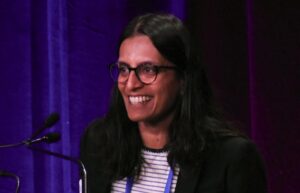
Abstract Presenter: Reethika Gongireddy, MD, Chief Resident, Internal Medicine
Newark Beth Israel Medical Center

Abstract Session: Abstracts: Epidemiology & Public Health III, 9:30–11 a.m., Wednesday, November 11
What is your abstract about?
Dr. Gongireddy: Our study examined national trends in hospitalizations, all-cause readmissions, and healthcare resource utilization among patients with rheumatoid arthritis (RA) over a 12-year period using the Nationwide Readmissions Database. Interestingly, we found that while RA-related hospitalizations declined substantially over time, the proportion of patients experiencing readmissions increased from 9.8% in 2010 to 13% in 2021. Despite fewer hospitalizations, the persistent burden of readmissions and healthcare costs highlights the importance of improving care beyond the initial hospitalization.
Why did you decide to investigate this topic?
Dr. Gongireddy: During my internal medicine training, I have cared for patients with RA who often have multiple comorbidities and complex healthcare needs. This made me curious about how hospitalization patterns and outcomes in RA have evolved over time. With advances in treatment and disease management, I wanted to understand whether these improvements were reflected in national hospitalization and readmission trends. I was particularly interested in looking beyond the initial hospitalization to better understand the ongoing burden of disease and opportunities to improve continuity of care.
What are you working on next related to this research?
Dr. Gongireddy: I am interested in further exploring factors associated with readmissions among patients with RA, particularly the role of comorbidities, frailty, and illness severity.
Understanding which patients are at greater risk of readmission may help identify opportunities for more targeted discharge planning, closer outpatient follow-up, and improved care coordination.
What excites you most about your work?
Dr. Gongireddy: What excites me most is the opportunity to use large-scale clinical data to answer questions that arise from everyday patient care. RA is a complex systemic disease, and its impact extends beyond joint symptoms. I find it particularly rewarding when research helps us better understand the broader healthcare challenges faced by these patients and identifies areas where we may be able to improve their long-term outcomes.
What are you most looking forward to at ACR Convergence 2026 in Orlando?
Dr. Gongireddy: I’m especially looking forward to learning about the latest advances in rheumatology, particularly emerging therapies and research in systemic autoimmune diseases. As someone pursuing a career in rheumatology, I’m excited to learn from experts in the field, exchange ideas with fellow researchers, and gain new perspectives that I can bring back to clinical practice. I’m also grateful for the opportunity to present our research and connect with others who share a passion for improving the care of patients with rheumatic diseases.

THERE’S STILL TIME TO JOIN US
If you haven’t registered for ACR Convergence 2026, you can still register on-site at the Orange County Convention Center in Orlando, Florida, through November 11. All registered participants receive on-demand access to scientific sessions through September 30, 2027.