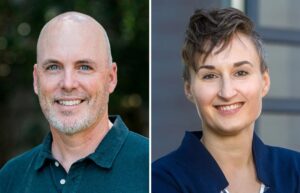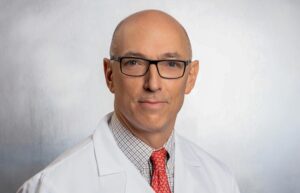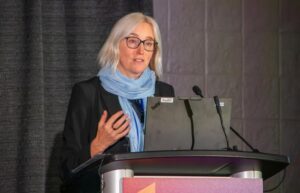
A Secrets and Pearls session on Tuesday, November 10, will bring doctors from different specialties together to share practical advice about pulmonary and dermatological concerns with systemic sclerosis.
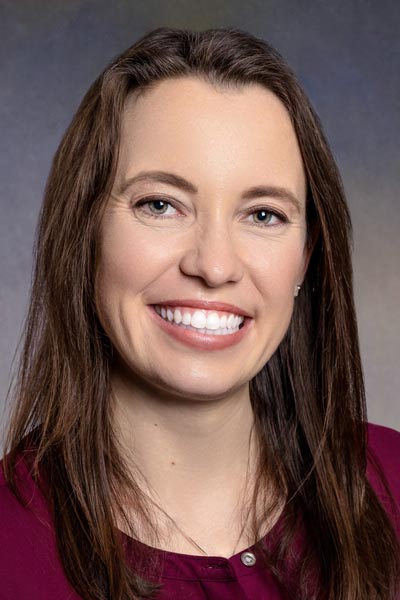
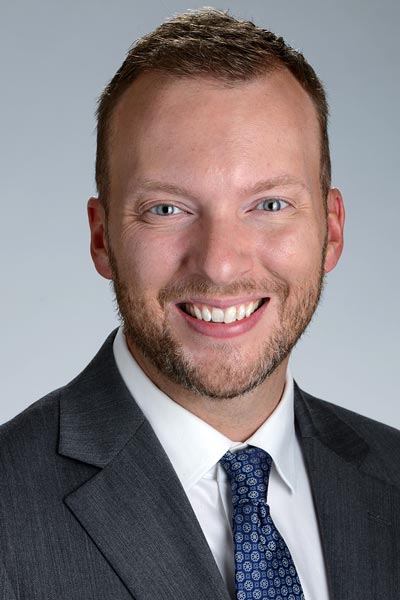
Erin Theisen, MD, PhD, Instructor of Dermatology, Harvard Medical School, and Scott Matson, MD, Associate Professor, Pulmonary, Critical Care and Sleep Medicine, University of Kansas School of Medicine, will speak during Secrets and Pearls: Scleroderma, from 10–11:30 a.m., in Room W308 of the Orange County Convention Center. A recording of the session will be available to registered participants of ACR Convergence 2026 for on-demand viewing.
Dr. Matson will review management of interstitial lung disease (ILD), focusing on monitoring disease progression and therapeutic options when the disease does progress. ILD is a leading cause of death and morbidity for patients with scleroderma. Dr. Matson said that rheumatologists are familiar with what to do in the beginning, just after diagnosis, so his presentation will look at patients facing more complex, long-term ILD issues.
“We’re trying to go beyond and move more toward how we monitor for progression. What are the things you think about when making decisions, and what are the treatment options at that point?” Dr. Matson said. “And then, for those patients who are stable, when do we think about backing off therapy, and what does that look like?”
Mycophenolate mofetil remains the initial therapeutic choice for most patients with ILD. Dr. Matson will discuss options for when initial treatment becomes less effective, including discussion about the pros and cons of antifibrotic treatments. The U.S. Food and Drug Administration (FDA) has approved one new therapy in the antifibrotic class, Dr. Matson said, and two other studies that now have Phase 3 data will likely lead to more FDA approvals.
“Part of what we’ll be talking about is helping rheumatologists contextualize these new FDA approvals in the ILD and fibrosis space, and how that should or should not influence the way they manage these patients with scleroderma-related ILD,” Dr. Matson said.
Dr. Theisen has expertise in connective tissue diseases such as scleroderma and will discuss adjunctive treatments that are common for dermatologists but less common for rheumatologists. For example, onabotulinumtoxinA is an off-label treatment for Raynaud’s phenomenon or ulcers that occur with scleroderma, and hyaluronidase can be used for scleroderma-induced microstomia.
Training for dermatologists focuses on identifying the unique cutaneous aspects of scleroderma, Dr. Theisen said, particularly when it comes to differentiating and assessing diffuse versus limited scleroderma.
“One of the key things we’ll be talking about is differentiating systemic sclerosis from other fibrosing conditions in the skin and picking up on some of those physical exam findings that may direct someone to think of another disease, such as eosinophilic fasciitis,” Dr. Theisen said.
In addition to sharing specific dermatological tips during the session, Dr. Theisen wants to highlight the role dermatologists can play in caring for patients with scleroderma and other rheumatologic conditions. Differences in background and training can lead to a different treatment approach for a patient’s skin concern that typically wouldn’t come up in the rheumatology clinic setting.
“Dermatologists see and treat these conditions and have additional tools and training that can really help these patients,” Dr. Theisen said. “So, including us in a patient’s care can be very, very helpful. Sometimes, we can help in differentiating and making the diagnosis of systemic sclerosis. We’re part of a team.”

THERE’S STILL TIME TO JOIN US
If you haven’t registered for ACR Convergence 2026, you can still register on-site at the Orange County Convention Center in Orlando, Florida, through November 11. All registered participants receive on-demand access to scientific sessions through September 30, 2027.