
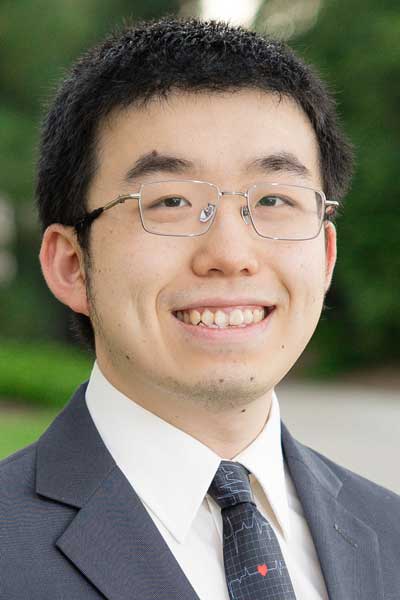
Abstract and Poster Presenter: Wenxian Zhou, BS, MD-PhD Student, University of Nebraska Medical Center.
Abstract Session: Abstracts: Cell Trafficking and Cell-Cell Communication (2971-2976), 11:30 a.m.–1 p.m., Wednesday, November 11
Poster Session: (1035-1049) Rheumatoid Arthritis – Translational Models and Mechanisms Poster B, 10:30 a.m.-12:30 p.m., Monday, November 9
What are your abstract and poster about?
Zhou: My poster demonstrates that a novel reactive aldehyde species inhibitor, ADX-246, prevented myocardial accumulation of malondialdehyde-acetaldehyde (MAA)-modified and citrullinated (CIT) proteins and attenuated cardiac dysfunction in collagen-induced arthritis (CIA) mice, a mouse model of rheumatoid arthritis (RA).
In a complementary oral presentation, we provide mechanistic insights into how MAA- and CIT- modified proteins activate human macrophages and subsequently promote pro-fibrotic responses in human coronary artery endothelial cells.
Why did you decide to investigate this topic?
Zhou: Heart failure is one of the leading causes of morbidity and mortality among patients with RA, yet the underlying mechanisms remain unclear. Post-translational protein modifications (PTMs), such as MAA and CIT, are targets of autoantibodies in RA. Prior work from our lab has also demonstrated MAA and CIT protein modifications synergistically activate macrophages and joint and lung fibroblasts, in addition to exacerbating inflammatory and fibrotic responses in tissues. However, the role of these PTMs in promoting cardiovascular complications in RA has not been studied. This led us to investigate whether these PTMs contribute to myocardial inflammation, fibrosis, and cardiac dysfunction in RA.
What are you working on next related to this research?
Zhou: We plan to utilize spatial transcriptomics and proteomics to identify potential mediators of this relationship and their spatial distribution in heart tissues from treated and untreated CIA mice. This will provide additional mechanistic insights into the pathogenesis of cardiac dysfunction in CIA and how ADX-246 attenuates this process.
We also plan to further characterize the pro-fibrotic endothelial responses mediated by MAA- and CIT- modified proteins.
What excites you most about your work?
Zhou: Our work has uncovered novel mechanistic insights into how myocardial accumulation of endogenously modified proteins may contribute to cardiac inflammation, fibrosis, and dysfunction in RA. We have also found that inhibition of MAA formation with ADX-246 can attenuate cardiac dysfunction in a mouse model of RA. I am excited to investigate whether MAA, CIT, or their downstream effectors could ultimately serve as novel biomarkers and/or therapeutic targets for reducing cardiovascular complications in patients with RA.
What are you most looking forward to at ACR Convergence 2026 in Orlando?
Zhou: I am excited to learn about cutting-edge research in rheumatic diseases from experts across the field, connect with other scientists and clinicians, and present our work to receive valuable feedback. I am also looking forward to exploring Orlando and enjoying the conference experience.

THERE’S STILL TIME TO JOIN US
If you haven’t registered for ACR Convergence 2026, you can still register on-site at the Orange County Convention Center in Orlando, Florida, through November 11. All registered participants receive on-demand access to scientific sessions through September 30, 2027.