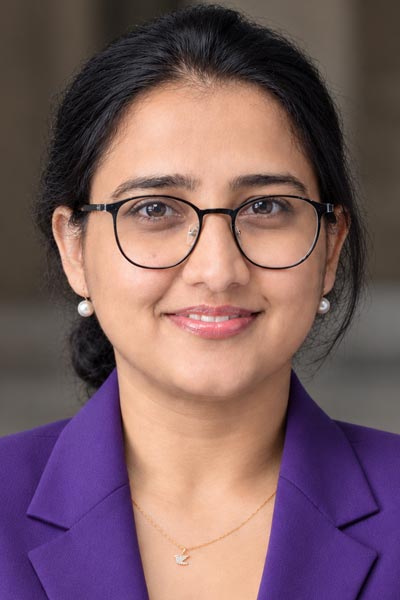
Abstract Presenter: Khushpreet Kaur, PhD, Postdoctoral Research Associate, Washington University School of Medicine
Abstract Title: Targeting Neutrophil Extracellular Traps with DNase1 as a Disease-Modifying Strategy for the Treatment of Inflammasomopathies
Abstract Session: Abstracts: Pediatric Rheumatology – Basic and Translational Science (2809-2814), 8–9:30 a.m., Tuesday, November 10
What is your abstract about?
Dr. Kaur: I am presenting my research on neonatal-onset multisystem inflammatory disease (NOMID), the most severe form of cryopyrin-associated periodic syndromes (CAPS), a group of autoinflammatory diseases caused by gain-of-function mutations in the NLRP3 gene. Also called chronic infantile neurologic, cutaneous, and articular (CINCA) syndrome, these mutations drive an overactive NLRP3 inflammasome that produces excessive inflammatory cytokines, including interleukin 1 beta (IL-1 beta) and IL-18.
Although current treatments effectively reduce systemic inflammation, skeletal and joint complications often persist, suggesting mechanisms beyond IL-1 beta-driven inflammation. Our research shows that, in addition to the products of the NLRP3 inflammasome (e.g., IL-1 beta and IL-18), DNA-containing neutrophil extracellular traps (NETs) influence disease severity. We targeted cell-free DNA (cfDNA) associated with NETs to determine whether its degradation with DNase I could reduce skeletal complications in NOMID.
Why did you decide to investigate this topic?
Dr. Kaur: Although IL-1 blockade effectively controls systemic inflammation in NOMID, it doesn’t prevent or reverse the abnormal bone and joint complications many patients experience. That gap pointed us toward NETosis and NET-derived cfDNA as additional, targetable drivers of disease.
What are you working on next related to this research?
Dr. Kaur: Given the short half-life of recombinant DNase I, which requires repeated injections, we’re now testing adenovirus-mediated delivery of DNase via a single injection using an inflammation-activated genetic switch designed by our collaborator, Dr. Jae-Hyuck Shim, and colleagues at the University of Massachusetts. This approach delivers the enzyme on demand, right when it’s needed, without repeat dosing, while minimizing the potential immunogenicity of the transgene. We will also focus on the underlying DNA-sensing mechanism that detects NET-associated cfDNA and amplifies inflammation.
What excites you most about your work?
Dr. Kaur: This project has real translational potential. If the approach proves effective in our mouse model of NOMID, it could open the door to testing in patients, offering a path to therapies that address a gap current treatment can’t reach and provide better long-term outcomes for NOMID patients beyond controlling systemic inflammation alone.
What are you most looking forward to at ACR Convergence 2026 in Orlando?
Dr. Kaur: This is my first time attending ACR, and as an early career investigator, I see it as a valuable opportunity to build connections in the field. I’m looking forward to connecting with fellow researchers specializing in innate immunity and autoinflammatory diseases, as well as networking with pediatric rheumatologists who work closely with CAPS patients, to better understand the clinical features and unmet needs of this disease.

THERE’S STILL TIME TO JOIN US
If you haven’t registered for ACR Convergence 2026, you can still register on-site at the Orange County Convention Center in Orlando, Florida, through November 11. All registered participants receive on-demand access to scientific sessions through September 30, 2027.