Artificial intelligence (AI) tools are proliferating throughout medicine and everyday life. The Basic & Clinical Research Conference (BCRC) at ACR Convergence 2026 will examine how AI is being used in rheumatology today and what questions the rheumatology community should be asking as these technologies develop and influence the evolution of the field.
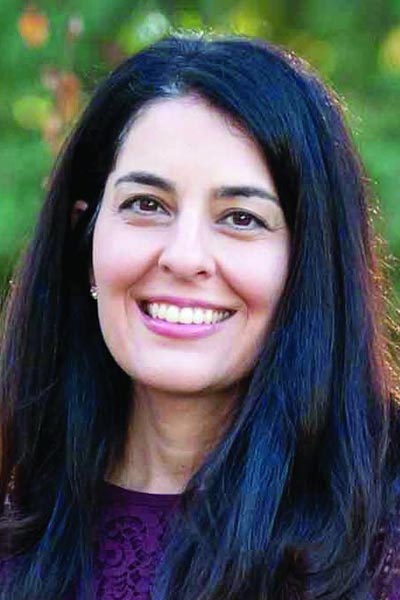
“AI is already changing our daily work as rheumatologists, and it is also changing how we do research,” said Jinoos Yazdany, MD, MPH, University of California, San Francisco, one of the moderators for the preconference programming taking place on Saturday, November 7, 8 a.m.–3:30 p.m. “We need to increase our AI literacy both so we can take advantage of these tools in our work, and also to understand their limitations and risks. Importantly, now is the time that we can all shape how AI tools are used in our field in the coming years.”
Joshua Denny, MD, MS, currently Chief Executive Officer of the National Institutes of Health’s All of Us Research Program, and as of November 1, Senior Vice President, Vice Dean for AI and Precision Medicine, and Chief Data Officer, University of Chicago, will give the keynote address of the BCRC.
“Josh is an incredible thinker and leader who has been at the forefront of clinical informatics and precision medicine for years,” Dr. Yazdany said. “Through All of Us, he is leading one of the most ambitious multimodal data efforts in the world and helping create the kind of AI-ready research resource that could be a tremendous asset to the rheumatology community.”
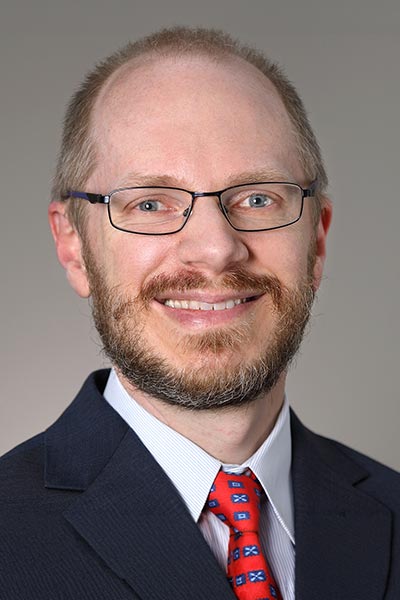
In his lecture, “Using AI and Big Data for Biomedical Discovery and Clinical Impact,” Dr. Denny will give an overview of the types of AI resources available to medical researchers and provide examples of the work that can be done leveraging these resources.
“I hope attendees walk away with an understanding that there are really powerful resources that are accessible that can help accelerate their research and some of the best practices for how to use them,” Dr. Denny said. “All of Us is going to be one of those, and then we’re going to talk about some of the other techniques to mine those data effectively.”
He will include information on the drawbacks and challenges to using AI, but he will focus on the need for quality data to effectively exploit AI tools.
“It starts with data accessibility,” Dr. Denny said. “You have to have good underlying data before you start deriving a lot of conclusions from it.”
Rheumatic diseases are particularly challenging for researchers because they are difficult to diagnose, they have multiple associations that significantly impact the lives of the people living with disease, and drug response is variable, he noted.
“If you amalgamate this huge data with clinical records and marry that to more and more molecular data—and a lot of this is going to be a future byproduct of care—then maybe we can make some advances for discovery, new treatments, and how we answer good questions and ultimately make people healthier.”
The remainder of the BCRC is divided into three themed sessions exploring different applications of AI in more depth.
Session I: Decoding Immunity: AI at the Molecular Frontier
- Introduction to Decoding Immunity: AI at the Molecular Frontier, presented by John Tsang, PhD, Yale University, Session I moderator
- Leveraging AI on Omics to Uncover Etiology of Immune-Mediated Conditions, presented by Soumya Raychaudhuri, MD, PhD, Brigham and Women’s Hospital
- Uncovering Longitudinal Immune Dynamics and Disease Targets: Computational and AI Approaches for Autoimmune Disease, presented by Fan Zhang, PhD, The University of Colorado
- Immune Repertoire + AI for Disease Diagnosis, presented by Mark Davies, PhD, Stanford University
Session II: Mapping Disease: AI Across Patients and Populations
- Introduction to Mapping Diseases: AI Across Patients and Populations, presented by Jinoos Yazdany, MD, MPH, University of California, San Francisco, Session II moderator
- Machine Learning Applications in RA, presented by Jeffrey R. Curtis, MD, MS, MPH, University of Alabama at Birmingham
- European Union-Wide AI Projects in Rheumatology: SPIDERR Project, presented by Rachel Knevel, MD, PhD, Leiden University Medical Center, Netherlands
- Flare Prediction in Rheumatoid Arthritis, presented by Dana Orange, MD, The Rockefeller University
Session III: Reimagining Care: AI for Scalable Health and Research Systems
- Introduction to Reimagining Care: AI for Scalable Health and Research Systems, presented by Katherine P. Liao, MD, MPH, Brigham and Women’s Hospital, Session III moderator
- Next Generation Clinical Trials with Artificial Intelligence and Real-World Evidence, presented by Tianxi Cai, ScD, Harvard University
- AI Development in Clinical Care: Promises and Pitfalls, presented by Mujeeb Basit, MD, MMSc, University of Texas Southwestern Medical Center
- Leveraging LLMs to Accelerate Research and Care in Rheumatology, presented by Suzanne Tamang, PhD, Stanford University
“When you look at the program, you will notice the incredible breadth. We go from AI applied to omics and immune biology, to disease prediction and population-level research, and then to clinical trials, large language models (LLMs) and implementation in clinical care,” Dr. Yazdany said. “It gives people a chance to see how AI is beginning to affect the entire continuum of rheumatology research and care.”
The BCRC lineup applies to all facets of rheumatology.
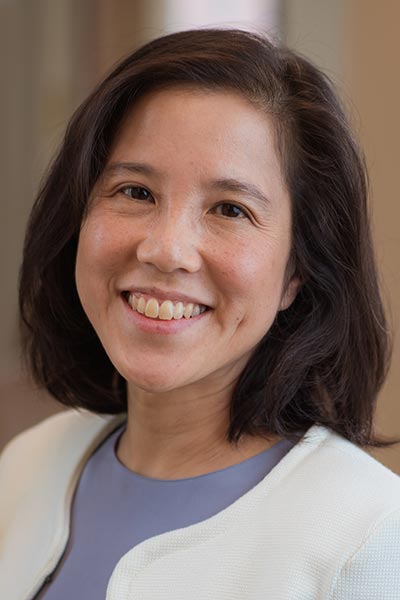
“AI is helping to drive cutting-edge research, and it’s getting a foothold in the clinic as well. Aspects of it are already integrated into clinical care,” Dr. Liao said. “As you know, it’s become a part of our everyday life, and what we’d like to showcase are some applications of AI tools throughout rheumatology. At the core, this is a science meeting covering a broad range of topics, from the etiology of autoimmunity through flare prediction in rheumatoid arthritis (RA), highlighting how AI has supported these discoveries. We’ll also discuss future applications on the horizon such as how AI can be used in clinical trials and clinical care, so very practical things for researchers and clinicians alike.”
An In Person Plus pass is required to attend the BCRC at the Orange County Convention Center in Orlando, Florida.

JOIN US IN ORLANDO
If you haven’t registered for ACR Convergence 2026, register today to participate in this year’s premier rheumatology experience, November 6–11 in Orlando, Florida. All registered participants receive on-demand access to scientific sessions after the meeting through September 30, 2027.