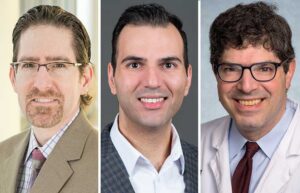
When examining patients, clinicians may have findings that do not fit neatly into classic disease categories. These puzzling indications may point to an underlying condition such as a rheumatic disease, may be the result of a previous infection such as COVID-19, or may be caused by the immunosuppressive drugs taken for a rheumatic disease. This is when clinicians turn to other healthcare providers for answers.

The ACR Convergence 2026 Curbside Consults session features three of these scenarios: how unrelated infections can result in rheumatic disease, metabolic bone diseases beyond osteoporosis, and diagnostic clues from a nail examination. The session will take place on Monday, November 9, from 8–9:30 a.m., in West Hall B3 and B4 of the Orange County Convention Center. A recording of the session will be available to registered participants for on-demand viewing.
Several health conditions can show up as changes in a patient’s nails. Victoria Werth, MD, Professor of Dermatology and Rheumatology at the University of Pennsylvania School of Medicine and Chief of the Division of Dermatology at the Philadelphia Veterans Administration Hospital, will discuss some of those changes and the underlying rheumatic diseases that can cause them.
Dr. Werth said that troubling nail findings may be related to an autoimmune disease, but not all are.
“For instance, quite frequently with the immunosuppression that people get, they can be at risk of getting onychomycosis, a fungal infection, in the nail,” Dr. Werth said. “They can get bacterial infections underneath the nail that can be green in color.”
Changes in the nail plate itself, changes around the nail, or in the nail bed capillaries, such as those seen in patients with autoimmune problems, may require a biopsy or examination via dermatoscopy.
“With dermatoscopy, it’s possible to see the vessels in the proximal nail fold,” Dr. Werth said. “You can see looping of the vessels, or dropout, or hemorrhage. In some diseases, like dermatomyositis or scleroderma, this can be very striking, and it can actually facilitate making a diagnosis in a case where it may be less clear from other clinical indications.”

Leonard Calabrese, DO, MACR, will discuss incidentalomas, unexpected abnormalities discovered during an unrelated test. A clinical immunologist, Dr. Calabrese is particularly interested in post-acute infectious syndromes, or PAIS—any type of chronic disease that can show up after a period of infection. It is a rarely discussed problem that he says plagues rheumatologists.
“A patient comes in and says, ‘I had this flu or respiratory infection or mono or COVID, and now I have arthritis, muscle aches, pain, fatigue, a litany of symptoms. What do I have? Is it coming from my infection?’ That is probably the ultimate incidentaloma,” Dr. Calabrese said.
Dr. Calabrese, Head of the Cleveland Clinic’s Section of Clinical Immunology in the Department of Rheumatic & Immunologic Disease and Director of the R.J. Fasenmyer Center for Clinical Immunology, will focus on SARS-CoV-2, which is of particular concern to rheumatologists because of a recent case definition by the National Academy of Medicine.
“They distinctly state that long COVID may manifest itself when single or multiple diagnosable conditions arise,” he said, listing fibromyalgia, connective tissue diseases, and autoimmune disorders, such as lupus, rheumatoid arthritis, and Sjogren’s disease.
This topic concerns all rheumatologists, he said.
“The National Academies have explicitly named many of our important diseases as long COVID complications,” Dr. Calabrese said. “Does this make any difference? It certainly makes a difference to patients, and it may make a difference for everything from healthcare benefits to how we treat these patients.”
Also on the panel is Mary Beth Humphrey, MD, PhD, Professor of Medicine and the Associate Dean for Research at the University of Oklahoma Health Sciences Center (OUHSC) in Oklahoma City. Dr. Humphrey will discuss the clues that a patient’s broken bones could be caused by metabolic diseases beyond osteoporosis.

THERE’S STILL TIME TO JOIN US
If you haven’t registered for ACR Convergence 2026, you can still register on-site at the Orange County Convention Center in Orlando, Florida, through November 11. All registered participants receive on-demand access to scientific sessions through September 30, 2027.