

The path to improved, sustained clinician well-being lies in organizational approaches to addressing issues in the work environment that magnify work burden and erode professional fulfillment, rather than simply relying on individual adoption of personal resiliency strategies.
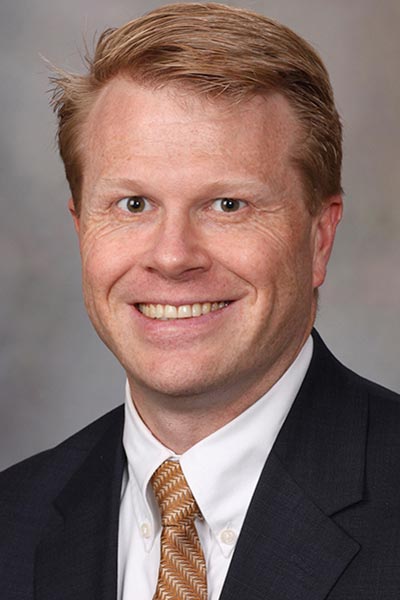
This is the message Tait Shanafelt, MD, will bring to the Opening Session of ACR Convergence, 4–6 p.m. on Saturday, October 25, at McCormick Place in Chicago.
“The evidence indicates that, despite high levels of resilience, physicians have higher levels of occupational distress,” he said.
Dr. Shanafelt, Chief Wellness Officer, Associate Dean, and the Jeanie and Steward Richie Professor of Medicine at Stanford University, has been a thought leader and researcher in the field of physician well-being and its implications for quality of care for over two decades.
“When it comes to overall mental health and risk of mental health challenges like depression, physicians are at similar or lower risk than other workers,” Dr. Shanafelt explained. “When we look at some of the other forms of occupational distress, considering domains like burnout, work-life integration, and moral injury, physicians have higher risk of these issues than workers in other fields.”
A hematologist/oncologist whose clinical work focuses on patients with chronic lymphocytic leukemia, Dr. Shanafelt’s interest in physician well-being and professional culture was piqued by observing the experience of interns he was leading as a senior resident. The comments made about medicine and caring for patients clashed with the dedication early career physicians exhibited and the sacrifices they had made to become physicians. He recognized that this misalignment was not good for anyone.
“Evidence has now demonstrated that there are many consequences of occupational distress, not just for physicians personally, but also for their patients, their organizations, and our entire healthcare delivery system,” Dr. Shanafelt said.
He suspected burnout might be at the root of the incongruities between words and deeds. When Dr. Shanafelt began a research rotation, he had the opportunity to explore this hypothesis.
“Twenty-five years ago, we performed the first study evaluating the relationship between burnout and quality of care, and we found a strong relationship between occupational burnout and suboptimal patient care practices. When that data was published, it became a lightning rod that galvanized both research and action.”
Dr. Shanafelt would go on to lead numerous follow-up studies alongside his leukemia research. Then, in 2007, he was asked to lead a newly created program on physician well-being at the Mayo Clinic that explored organization- and system-based interventions. In 2017, he moved to Stanford to become the first healthcare Chief Wellness Officer.
“It’s now well-recognized that occupational distress among physicians is a prevalent problem and that it’s having deleterious consequences for our patients and organizations,” Dr. Shanafelt said. “Vanguard organizations began to take substantive and meaningful action to change the practice environment to address this issue seven or eight years ago.”
Evidence has shown these system-based approaches have a transformative impact.
“We’re now at the place where we need more organizations to engage in that work and to have physicians work in partnership with their organizations to accelerate progress and the change we desire,” Dr. Shanafelt said.
Dr. Shanafelt has served as a member of the National Academy of Medicine Committee on System Approaches to Support Clinician Well-being, as well as the National Academy Clinician Well-being Steering Committee. In 2018, he was named by TIME Magazine as one of the 50 most influential people in healthcare. He has published over 580 peer-reviewed manuscripts and commentaries in addition to hundreds of abstracts and book chapters.
The ACR Convergence 2025 Opening Session will also feature remarks from ACR President Carol A. Langford, MD, MHS, ARP President Adam Goode, PT, DPT, PhD, and Rheumatology Research Foundation President Liana Fraenkel, MD.

JOIN US IN ORLANDO
If you haven’t registered for ACR Convergence 2026, register today to participate in this year’s premier rheumatology experience, November 6–11 in Orlando, Florida. All registered participants receive on-demand access to scientific sessions after the meeting through October 31, 2027.