

With demand for rheumatologic care outpacing the supply of rheumatologists nationally, a common challenge for many clinical rheumatologists is time management. Clinicians often feel the pressure to see as many patients as possible while struggling with the burden of burnout. These factors make time-saving strategies and tactics particularly valuable for care teams and patients.

In the session Work Smarter, Not Harder: Hacks for Different Electronic Medical Records to Optimize Your Rheumatology Practice, 8:30–9:30 a.m. on Tuesday, October 28, in Room W475A-B of McCormick Place, experts will guide attendees through time-saving tricks for two electronic medical record (EMR) platforms.
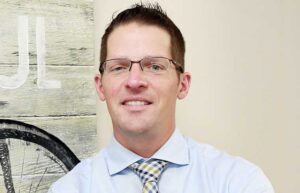
“I think a lot of us chose to be doctors because we want to spend time with patients, but a large part of our job becomes documenting patient encounters or placing orders in the computer system, and as the years have gone on, those tasks seem to encompass more and more time,” said Lesley Davila, MD, Associate Professor of Internal Medicine in the University of Texas Southwestern Division of Rheumatic Diseases. “We wanted to cover how we can have the EMR work for us, instead of against us, to minimize our time on the non-patient-facing work we need to do.”
Dr. Davila will cover time-saving tactics within the EPIC EMR system. Adahli Massey, MD, FACR, a rheumatologist at the East Alabama Arthritis Center, will explore similar optimizations within the NextGen EMR platform.
One area where clinical rheumatologists can streamline workflows for increased efficiency is note-taking during and after patient visits. According to Dr. Davila, EPIC offers several customizable note-taking templates, as well as artificial intelligence-driven dictation tools using recordings of patient encounters.
“The goal is to optimize our time spent with the patient,” Dr. Davila said. “With these tools in the room, we can face the patient, look at them, and have a conversation while the note writing is being done in the background, so the patient experience is better.”
The session will also address how care teams can decrease their time spent working in a patient’s chart, filling prescriptions, or answering patient phone calls and portal messages.
“We’ve also incorporated some billing features, which really do make things faster, but also potentially more profitable by ensuring we’re accurately capturing billing for the services we’re providing,” Dr. Davila said.
On-demand access to recorded presentations will be available to registered attendees of ACR Convergence following the annual meeting through October 31, 2026.

JOIN US IN ORLANDO
If you haven’t registered for ACR Convergence 2026, register today to participate in this year’s premier rheumatology experience, November 6–11 in Orlando, Florida. All registered participants receive on-demand access to scientific sessions after the meeting through September 30, 2027.