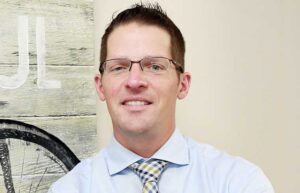



Poster Presenter: Adam Edwinson, PhD, Assistant Professor of Medicine, Mayo Clinic
Poster Title: Small Bowel Microbial Dysbiosis and Impaired Intestinal Absorptive Function in Systemic Sclerosis – A Single Center Prospective Study
Poster Session C: 10:30 a.m.–12:30 p.m. on Tuesday, October 28
What is your poster about?
“Systemic sclerosis (SSc) is a complex, heterogeneous, multisystem autoimmune disease, with gastrointestinal (GI) symptoms reported in >90 percent of SSc patients. Our group has previously shown that severe intestinal dysmotility predominantly involves the small bowel in SSc, suggesting a larger focus should be placed on small intestinal rather than fecal microbiota. Although small intestinal bacterial overgrowth (SIBO) is frequently described in SSc, there have been no studies that have specifically characterized the small intestinal microbiome in SSc and how this may relate to GI symptomology. Therefore, we sought to characterize the small intestinal microbiome and in vivo intestinal absorption in patients with SSc, comparing them to healthy volunteers. We found SSc patients had decreased small intestinal absorptive function and overall, significant shifts in bacterial composition, coupled with decreased microbial diversity compared to healthy individuals. We found nine bacterial taxa were in greater abundance in patients with SSc compared to healthy volunteers, highlighted by increases in Fusobacterium, a genus previously identified to correlate with GI symptoms in SSc. Interestingly, we also found the bacterial phylum Firmicutes, which is known to aid in absorption, decreased in SSc. These findings highlight the need to understand and identify the potential role of small intestinal microbiota composition in SSc and how it relates to poorer GI function.”
Why did you decide to investigate this topic?
“The large majority of SSc patients (~90 percent) report having GI symptoms of varying severity, with significant impact on their health-related quality of life, which we have reported in our work also being presented at ACR Convergence 2025 in poster #1558; yet the underlying causes of GI symptoms remain poorly defined. Intestinal microbiota are critical for maintaining homeostatic function in the GI tract, with microbial dysbiosis commonly reported in GI disorders. A loss of beneficial commensals, or an abundance of pathobionts, have been linked to insufficient metabolism, increased permeability, and visceral hypersensitivity, as well as poorer nutrition due to malabsorption. This is in part due to shifts in active bacterial metabolic pathways leading to the generation of noxious metabolites and host responses like inflammation. In the context of SSc, research has focused on shifts in fecal microbiota profiles relative to healthy participants, noting decreases in beneficial bacteria and parallel increases in pathobionts. Our work has begun to identify key differences in the small bowel microbiota that may be linked to impaired small intestine absorptive capacity coupled with an expansion of pathobionts like Fusobacterium, which may contribute to fibrosis and poorer GI outcomes.”
What are you working on next related to this research?
“We are interested in further understanding bowel microbiota in SSc and the role it has in GI pathobiology. We are using both in vitro approaches and an in vivo humanized mouse model to study the small bowel microbiota from SSc patients, specifically host-microbiota interactions, and the impact on GI physiology. With this in mind, we are also interested in understanding changes in epithelial biology, especially considering the observed reduction in absorptive capacity in SSc patients. As part of this work, we have collected both serum and small bowel biopsies from SSc and healthy individuals. Our goal is to leverage these to identify molecular signatures that may be predictive of, or altered signaling pathways explaining, small bowel dysfunction in SSc.”
What excites you most about your work?
“To our knowledge, this is the first study that explores small intestine microbiome composition in SSc and how this correlates with GI symptoms in these patients. We see this as an unmet need, particularly for SSc, and view this project as an excellent example of how collaboration and interdisciplinary work can lead to novel discoveries that are translational in nature. With Dr. Ashima Makol’s expertise in SSc and Dr. Madhusudan Grover’s expertise in GI disease at the Mayo Clinic, we are hopeful these approaches will lead to novel targets, or markers, for therapeutic interventions in SSc patients, especially those with GI-related comorbidities.”
What are you most looking forward to at ACR Convergence 2025 in Chicago?
“We are excited to share our work with everyone at ACR Convergence 2025 and, importantly, see ACR Convergence as an excellent opportunity to put a spotlight on small bowel microbiota involvement in SSc. With so many SSc patients suffering from GI symptoms and the critical role microbiota has in maintaining GI health, we see ACR Convergence 2025 as an environment that will generate meaningful conversations around small bowel involvement in SSc. We view ACR Convergence as the perfect platform to share our work, bringing small bowel microbiota to the forefront of the conversation with colleagues and potential collaborators, all while placing a greater emphasis on understanding the importance of small bowel involvement in SSc.”

JOIN US IN ORLANDO
If you haven’t registered for ACR Convergence 2026, register today to participate in this year’s premier rheumatology experience, November 6–11 in Orlando, Florida. All registered participants receive on-demand access to scientific sessions after the meeting through October 31, 2027.