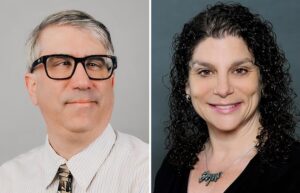
Teaching Pearls is a popular session at ACR Convergence, and the 2026 edition will feature educators from across the country who will cover an array of topics, from program-level initiatives to learner-centered ideas.
“It’s a great way to source ideas from people from the community who are working in fellowship, working in education, and get little kernels of ideas of what people are doing. It tends to be really current, really kind of fun,” said Session Moderator Kristen Hayward, MD, Seattle Children’s Hospital/University of Washington School of Medicine.
Education & Wellness Inspirations (Teaching Pearls) will take place on Sunday, November 8, from 3–4:30 p.m., in Room W205 of the Orange County Convention Center. A recording of the session will be available to registered participants of ACR Convergence 2026 for on-demand viewing.
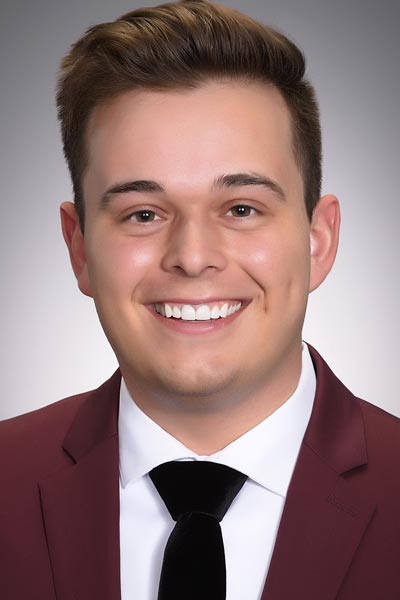
Presenters include Joshua Samec, MD, who, as part of his fellowship at the Minneapolis VA Medical Center, joined with members of his journal club to use artificial intelligence (AI) in their discussion sessions by asking it to summarize articles they were reading.
“AI is a great thing to use to make it a little bit more efficient, so we can get through more articles,” he said.
Dr. Samec was careful to add guardrails to reduce the risk of receiving incorrect information in response to the journal club’s queries. Being aware of AI’s shortcomings and learning how to put up those “bumpers” is part of learning to interface with AI, he noted.
“I made sure [the AI platform] had the article I wanted it to reference, and I gave it instructions that [the article] is the only place it should answer the question from or pull information from,” he said.
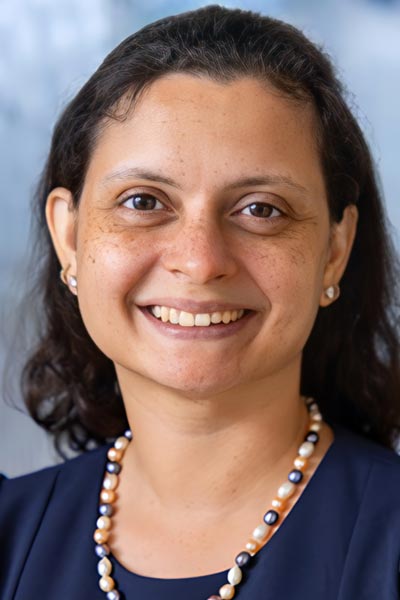
Sonam Kiwalkar, MD, Clinician-Educator at Virginia Mason Franciscan Health in Bellevue, Washington, will discuss the Bingo-type game she and colleagues developed to fill gaps in musculoskeletal education among internal medicine students. Their test study, which covered 11 residency programs and 276 students, showed improvement in knowledge and self-reported confidence.
Dr. Kiwalkar said that many studies indicate lectures and other forms of passive medical education do not engage today’s learners or result in knowledge retention. Generation Z learners, and those who will follow, want an active learning environment.
“They are shying away from passive. They want to be more hands-on. They value peer input,” Dr. Kiwalkar said. “They’re exposed to so many games that it’s natural for them to learn in this engaging way. That’s one of the reasons why I am a big proponent of gamification.”
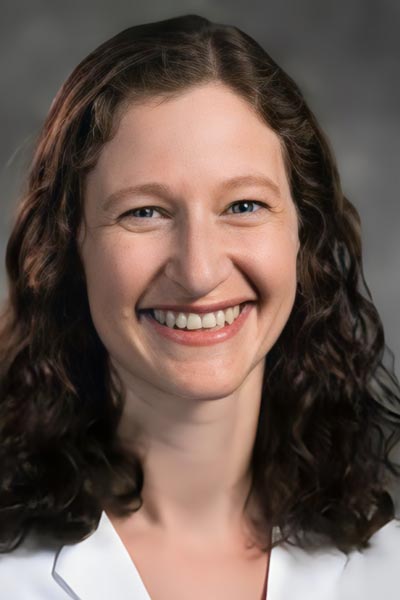
Weekly clinic conferences give fellows a chance to learn about unusual cases, as well as discuss multiple solutions to everyday issues, said Rebecca Sadun, MD, PhD, Associate Professor in the departments of Medicine and Pediatrics, Duke University School of Medicine.
During sessions called “Balancing the Hoofbeats: Training the Ear for Zebras as well as Horses,” pediatric rheumatology faculty members present “zebra” cases, such as a case of Aicardi-Goutières syndrome, where fellows consider how to evaluate for and differentiate between monogenic lupus and similar autoinflammatory conditions, or a never-miss mimicker of rheumatic disease, such as a case of cancer that presents like juvenile idiopathic arthritis (JIA), or pachydermodactyly, which mimics JIA but won’t improve with JIA medications.
In addition, each week the on-call fellow has the opportunity to pose a bread-and-butter management question, such as “How do you handle a patient beginning to develop methotrexate-associated nausea?” Senior fellows and faculty around the room each provide their “pearls” for preventing and/or approaching that management question, which in the case of methotrexate-associated nausea, would result in at least 10 strategies being shared.
“This gives an early fellow a much larger tool belt in terms of approaches,” said Dr. Sadun.

Lisa Zickuhr, MD, MHPE, Associate Program Director for the Rheumatology Fellowship at Washington University/B-JH/SLCH Consortium in St. Louis, will talk about the best way to conduct interviews when recruiting fellows.
“An organization wants to recruit applicants who will excel with the unique resources and structures in their programs,” Dr. Zickuhr said. “But traditional interviews, asking about the applicants’ future plans, doesn’t necessarily predict how well they will fit into the position you’re interviewing for.”
Washington University has found greater success by switching to competency-based questions that have applicants describe a time they used the skills the position will require.
“I will talk about Wash U’s experience identifying the skills designing questions and then implementing them into interviews, and using the responses to help with recruitment and deciding: Does Wash U have the resources to match this applicant? Does Wash U have the environment where their skills are really going to shine?” she said.
The panel also includes Jay Mehta, MD, MS, Pediatric Rheumatologist and Program Director of the Pediatrics Rheumatology Fellowship at the Children’s Hospital of Philadelphia, who will present “Rheumatology Fellowship Program SWOT.”

JOIN US IN ORLANDO
If you haven’t registered for ACR Convergence 2026, register today to participate in this year’s premier rheumatology experience, November 6–11 in Orlando, Florida. All registered participants receive on-demand access to scientific sessions after the meeting through September 30, 2027.