
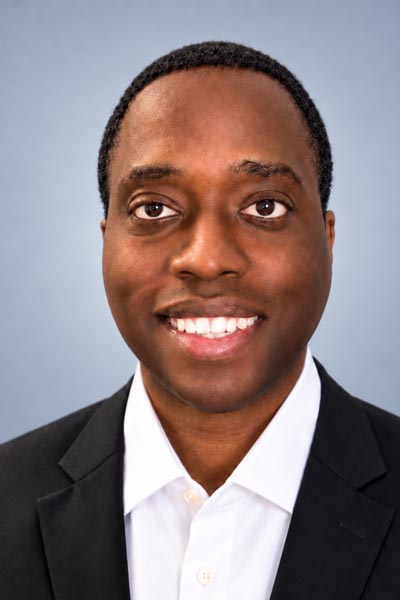
Abstract Presenter: Mario David Felix, MD, MHS, Attending Rheumatologist, Yale School of Medicine, and Advanced Fellow in Medical Informatics, VA Connecticut Healthcare System
Abstract Title: Pre-Referral Workup and Timeliness of Inflammatory Arthritis Care Among New Rheumatology Referrals in the Veterans Affairs Healthcare System
Abstract Session: Abstracts: Health Services Research (2947-2952), 11:30 a.m.–1 p.m., Wednesday, November 11
What is your presentation about?
Dr. Felix: It is an evaluation of a health system’s capacity to deliver timely care for inflammatory arthritis and where it can improve. We followed almost 200,000 veterans referred to rheumatology for the first time across 120 U.S. Department of Veterans Affairs (VA) facilities over nine years and asked whether the workup ordered before the referral changed how quickly they were seen and treated. Two-thirds of referrals arrived with some workup, and testing matched to the clinical picture was what tended to end in a diagnosis of inflammatory arthritis. In adjusted models, workup was associated with about two fewer days to the first visit and about four fewer days to treatment, and about seven in rheumatoid arthritis (RA). Those are modest differences, but in inflammatory arthritis, every day taken off the path to evaluation and treatment counts. Roughly half of the variation in wait time, though, was explained by the facility rather than the patient. So, the presentation makes the case for two targets: the referral itself, which is a practical place to start, and the facility, where scheduling, triage, and capacity determine how long patients wait.
Why did you decide to investigate this topic?
Dr. Felix: In clinic, I noticed that patients who arrived with any workup already done tended to be diagnosed and treated sooner, and that referrals carrying an interesting lab result tended to (appropriately) get scheduled sooner. That has real consequences. Earlier treatment improves outcomes in inflammatory arthritis, and in RA in particular, and with the projected shortage of rheumatologists, anything that lets the first visit be a treatment visit rather than a test-ordering visit matters more every year. Nobody had described at a national scale in the U.S. what actually gets ordered before a rheumatology referral or whether it changes the pathway, and the VA, with a single electronic record across the country, is one of the few places where that question can be answered.
What are you working on next related to this research?
Dr. Felix: The next step is building informatics interventions that act on what we found, including work on how artificial intelligence (AI) can support the referral process, and validating the referral-pathway findings outside the VA in a health system with a younger and more balanced population.
What excites you most about your work?
Dr. Felix: That the findings point to practical interventions, either at the time of referral or in how facilities manage their capacity, rather than to problems we cannot act on. That is what makes health systems research exciting to me: You can see where care slows down across hundreds of thousands of patients and then go work on the part of the system causing it.
What are you most looking forward to at ACR Convergence 2026 in Orlando?
Dr. Felix: Seeing new work before it is published. The meeting is the one place each year where the field shows what it is working on before it reaches the journals, and I am looking forward to the talks as much as to giving my own.

JOIN US IN ORLANDO
If you haven’t registered for ACR Convergence 2026, register today to participate in this year’s premier rheumatology experience, November 6–11 in Orlando, Florida. All registered participants receive on-demand access to scientific sessions after the meeting through September 30, 2027.