Insurers can put a lot of barriers between clinicians and patients in the form of restrictions, denials, and prior authorization delays. Those barriers create not only frustration and treatment delays for patients, but burnout for providers and staff doing their best to get patients the therapies they need.
“Prior authorizations are kind of the ‘Mother, May I?’ in the practice,” said Georgia Bonney, BSc, Practice Manager of Virginia Rheumatology Clinic in Chesapeake, Virginia. “Regardless of the best decision a rheumatologist and their patient can make for treatment, the payers create these barriers that we have to overcome.”

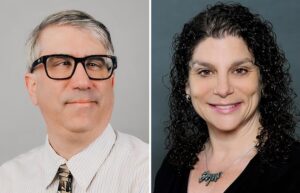
In the session Rheumatology Biologic Prior Authorizations: Common Pitfalls, Best-Practice Documentation, and Partnering for Success, Bonney and Angelo Santangelo, MA, PACS, Office Manager and Biologic Coordinator at Rheumatology Associates of Long Island, Smithtown, New York, will recommend ways rheumatology offices and patients can smooth the prior authorization pathway so that patients get the medications they need, as quickly as they need them, and with as few glitches as possible.
The session will be held on Sunday, November 8, from 1–2 p.m., in Room W315 of the Orange County Convention Center. A recording of the session will be available to registered participants of ACR Convergence 2026 for on-demand viewing.
It’s not unusual for clinicians to make treatment decisions with patients, but prior authorization denials can mean weeks-long delays in therapies, Bonney said. That naturally leads to patient dissatisfaction and, in some cases, worsening disease activity. A symbiotic relationship between the clinician and their access specialist or biologic coordinator, who has a thorough understanding of each plan’s formularies, tiering criteria, exception policies, and prior authorization documentation requirements, is critical to the approval process.
“There are a lot of hidden things that could ultimately result in a buy-and-bill claim denial, which goes back to the prior authorization and the detail of the authorization that needs a review,” she said. “As far as infusion management, we have to work beyond that prior authorization to secure full revenue cycle management. We have to communicate with the provider if there’s additional documentation or criteria required in the medical record. Is there a correction needed or an appeal? A prior authorization revision? In order to appeal, we need to understand the payer guidelines, the reasons for denials, and respond in a timely manner to increase our chance of success.”
While Bonney’s presentation will focus on buy-and-bill intravenous and infusion products used in a clinician’s office, Santangelo will talk about how patients can successfully navigate their prior authorizations at the pharmacy to access their at-home medications.
There are strategies and internal procedures for responding to a treatment denial and ending up with an approval, Bonney said, but even then, there can still be delays.
“Let’s say everything works perfectly,” Bonney said. “We still need time to retrieve that authorization approval, engage in any manufacturer support programs that are available to help patients with financial support due to the cost of our medications, time to schedule the patients, time to order inventory, and then, of course, a financial review after providing the infusion and filing that claim.”
Bonney hopes that introducing artificial intelligence (AI) and integrated electronic prior authorizations into the process can increase prior authorization approvals and improve turnaround time, ultimately enabling patients to start their medications sooner.
“Patients aren’t necessarily looking for an immediate response or cure,” she said. “They’re looking for timely support. They’re looking for drug access.”

JOIN US IN ORLANDO
If you haven’t registered for ACR Convergence 2026, register today to participate in this year’s premier rheumatology experience, November 6–11 in Orlando, Florida. All registered participants receive on-demand access to scientific sessions after the meeting through September 30, 2027.