
An advocate for responsible use of artificial intelligence (AI) in healthcare will deliver the keynote address at the Opening Session of ACR Convergence 2026. Brian Anderson, MD, Chief Executive Officer of the Coalition for Health AI (CHAI), will take the stage with ACR leadership 4–6 p.m. Saturday, November 7, as the premier rheumatology meeting kicks off in Orlando, Florida.
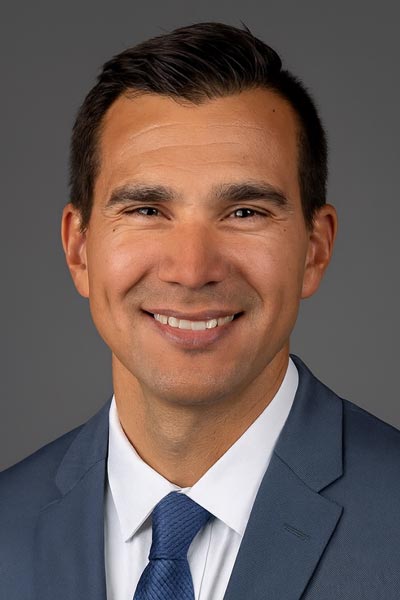
“There’s a lot of excitement and hope about the future of AI, and I’m proud of all of the exciting work that CHAI and the larger health AI community has done to advance innovation in this space. But as we’ve seen in the past several months, there’s a significant amount of concern that’s appropriately justified with what we’re seeing come out of the news in terms of the level of trust that our patients and clinicians have for it,” Dr. Anderson said. “I’m looking forward to having an honest discussion about the encouraging use cases for AI in healthcare and how we balance that innovation with responsible and safe adoption that patients and the larger ecosystem can trust.”
In his address, “Building a Future for Health AI We Can Trust: Innovation, Human Judgment, and the Changing Work of Medicine,” Dr. Anderson will detail ways AI is being harnessed to deliver care to patients, enhance the drug design process, decrease clinician burnout, and improve provider-patient connections. He will also discuss some of the negative perceptions of AI.
“Many surveys have shown that Americans think AI is bad for our society,” Dr. Anderson noted. “As an industry, we must acknowledge this and appreciate that our patients come from a different perspective, often not trusting these AI tools. It is therefore important that we educate our providers on how we can think critically about AI.”
While new AI technology is being developed quickly, Dr. Anderson emphasizes that AI is a tool among many, and the application of varied tools in high-risk scenarios, including healthcare, is not new.
“When we think about the use of tools and high-risk scenarios, this is something that, collectively, we have figured out across other sectors in our economy,” he noted, citing examples in the aerospace, automotive, and energy fields. “Coming together, bringing the private sector and the public sector and our patient advocates together to build a common set of guardrails codified in the regulations that we see in the public sector, is something we’ve done in the past, and I do believe that is something we can figure out together.”
After playing a key role in using AI to analyze data during the COVID-19 pandemic for what would become the public-private partnership Operation Warp Speed, Dr. Anderson co-founded the nonprofit CHAI in 2021 with the goal of developing consensus-driven guidelines and best practices for AI use in healthcare, and supporting the independent testing validation of AI for safety and effectiveness.
“We had several private sector organizations, tech companies, hospitals and health systems of all sizes—and any number of them were using AI,” Dr. Anderson said, recalling the landscape of 2020. “We went back to them and we asked, ‘Hey, do we have consensus on what responsible AI means?’”
The answer was no, but there was a shared recognition of the need to establish a common definition of what it means to build AI in a responsible, trustworthy way for use in healthcare. That was the guiding principle of CHAI when it launched. The coalition has grown to include more than 3,000 members in the past five years, which has seen the public introduction of ChatGPT and numerous other AI platforms.
“It’s an effort that has tapped into a lot of organizations and a lot of patients’ and clinicians’ interests in building that common North Star of what trustworthy AI looks like and means to all of us,” Dr. Anderson said.
An internationally recognized author, Dr. Anderson previously served as the chief digital health physician at MITRE. In this role, he led research and development for multiple strategic initiatives in digital health alongside industry partners and the U.S. government. Dr. Anderson has also served on health information technology committees in partnership with the Office of the National Coordinator (ONC), the National Institutes of Health (NIH), and the Organization for Economic Cooperation and Development (OECD). Most recently, he serves on the United Kingdom’s National Commission into the Regulation of AI in Healthcare.

JOIN US IN ORLANDO
If you haven’t registered for ACR Convergence 2026, register today to participate in this year’s premier rheumatology experience, November 6–11 in Orlando, Florida. All registered participants receive on-demand access to scientific sessions after the meeting through September 30, 2027.